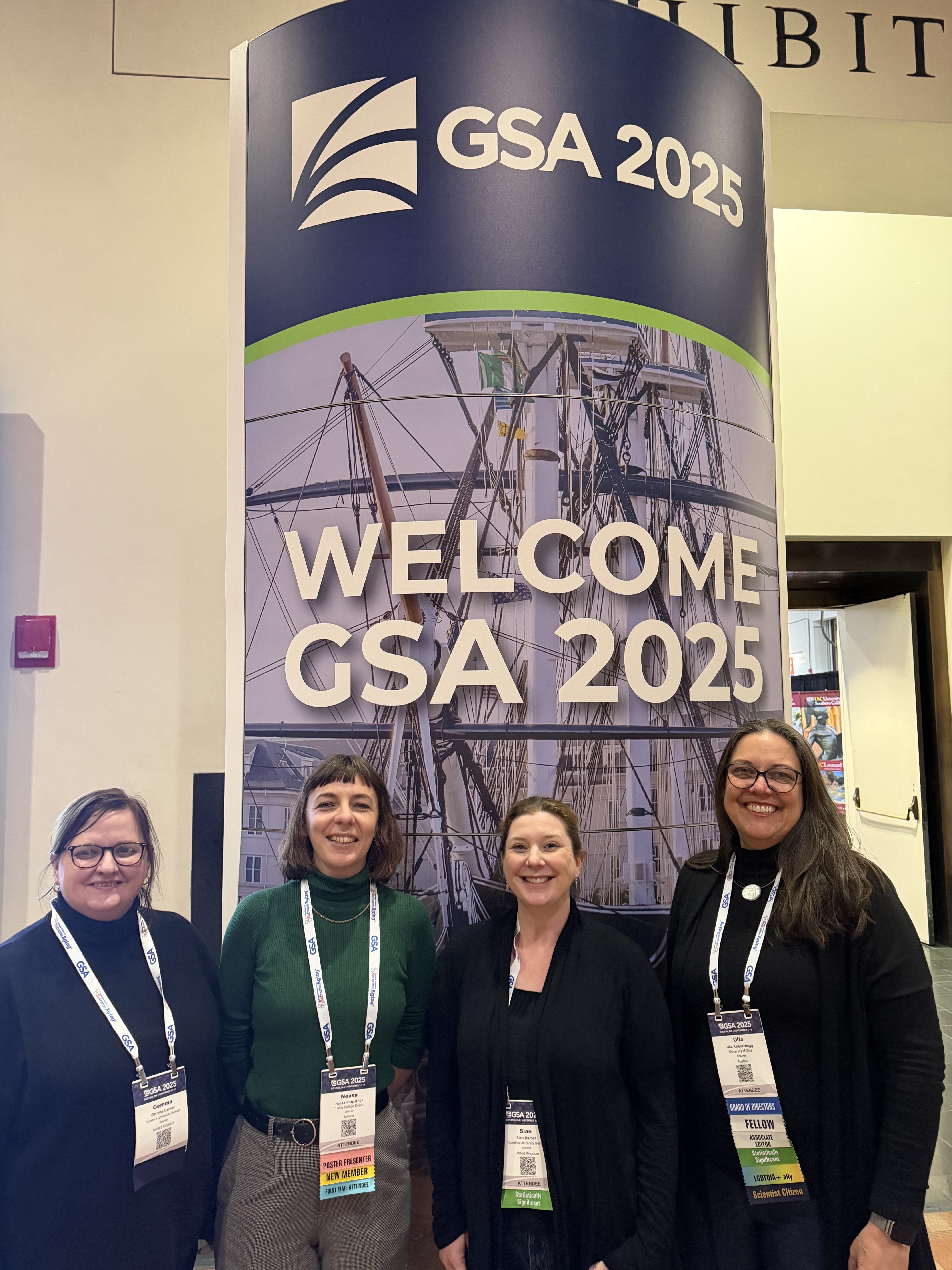
Neasa Fitzpatrick is a trainee geriatrician working in Tallaght University Hospital and a clinical lecturer in Trinity College Dublin. She has a keen interest in healthcare humanities and cultural gerontology and has published several works in this area. She posts on X @neasa_ngp and Bluesky @neasangp.bsky.social.
One of the challenges of geriatric medicine is to engage with the broader field of gerontology. As a trainee in geriatric medicine, I was particularly interested to experience the premier and largest gerontology meeting in the world, the Gerontological Society of America (GSA), held in Boston in November. Added piquancy was provided by the feelings of uncertainty around the United States right now. This is especially true in gerontology, an academic discipline and clinical specialty that has long faced challenges in securing institutional regard and associated funding. I therefore made my way to Boston somewhat trepidatiously. My anxiety was quickly assuaged on arrival at GSA, where it became clear that gerontology is thriving more than ever across the Atlantic.
The theme for 2025 was Innovative Horizons in Gerontology, perhaps subconsciously, if not directly, speaking to that uncertainty and painting a brighter view of the future. GSA has always been noted for its broad inclusion of disciplines – from the biophysical to the metaphysical – and its appreciation of interdisciplinary work. President Marilyn Gugliucci continued these traditions this year, incorporating a vastly diverse network of speakers, projects, and symposia that highlighted just how lively and multifaceted the field of gerontology remains. Gugliucci herself made for a gregarious, dynamic and upbeat host, an attitude that filtered down through the conference. She even gave us dancing lessons!
The programme was at times almost overwhelming, and colleagues lamented the lack of a printed programme rather than an online app. Given the sheer volume of content on display at the conference, however, a paper programme would have made a hefty tome. Symposia were thematically arranged rather than by discipline. For example, a symposium entitled Ageing, Ethics & Society featured a quantitative demographic survey, two ethnographic interview studies and a literary analysis. The speakers came from different disciplinary backgrounds – social work, public health, anthropology, literary studies. This created rich ground for transdisciplinary engagement and methodological exchange. It also forced attendees to engage more deeply with the conference programme to find symposia of interest.
As a trainee geriatrician with an interest in cultural gerontology, I was drawn to sessions examining cultural representation and humanities-based inquiry. GSA has an advisory panel specifically dedicated to the promotion of humanities-based interdisciplinary work. This year there were two separate symposia specifically on the humanities and ageing, as well as a dedicated poster session and other presentations. Justine McGovern of Lehman University, NYC, outgoing chair of the Humanities & Ageing Advisory Panel, helmed a particularly wonderful session on visual arts, creativity and ageing on Saturday morning which led to a spirited debate on the tendency to extremes – both positive and negative – in ageing representation.
It was also the inaugural year of the W. Andrew Achenbaum session, in memory of a figure affectionately regarded as the father of gerontological humanities in GSA. The love, respect and admiration demonstrated by his colleagues reminded me of a similar session we run at the Irish Gerontological Society meeting in memory of Professor Davis Coakley. There is something particularly special in sessions like these for early-career scholars and trainees like me. They highlight the strength of close ties and mentorship within clinical and academic environments; most notably the passion and engagement they seed.
While symposia were given scope to explore nuanced themes and niche theory, the headline lectures were firmly rooted in broadly applicable, practice-based research. Geriatricians will feel particularly represented by the Donald B. Kent and Robert W. Kleemeier Award lectures. Peter Lichtenberg of Wayne State University presented the Kent lecture on his patient-centred model for assessing financial capacity. In the Kleemeier lecture, Jiska Cohen-Mansfield of Tel Aviv University discussed research in non-pharmacological interventions for distress symptoms in dementia. Both speakers are geriatricians, yet the central position of these topics at an interdisciplinary conference tells us that their relevance extends beyond the clinical. This is one of the great privileges we have in geriatric medicine – a specialty that transcends laboratory and hospital. Conferences like GSA showcase this marvellously.
Chief executive officer James Appleby highlighted current threats to gerontology and public health in his welcome address, calling for scientists and academics to become more involved in advocacy and policy-making. Public health and policy underpinned many of the symposia, with public health stalwart Leana Wen’s enthusiastic and energising keynote address setting the tone. Perhaps owing to gerontology’s historical position as something of an underdog, these conversations did not feel all that unfamiliar, however. The overarching theme throughout the conference was still one of positivity, and a drive for action, progress, and new lines of inquiry. As promised, GSA 2025 provided new horizons to which we can look forward in the ever-evolving field of gerontology. I would heartily recommend attendance for trainees in geriatric medicine at least once during their training.