Professor Peter Townsend, sociologist, social policy analyst and campaigner: was born in Middlesbrough. His academic career spanned six decades during which he studied poverty, ageing. disability and health inequalities. In 1979 he published his magnum opus Poverty in the United Kingdom.
The Last Refuge
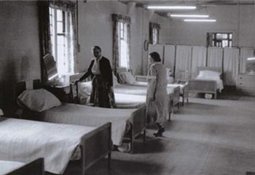
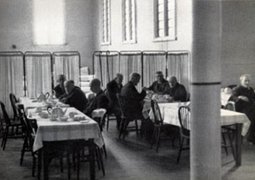
Townsend began his seminal study of old people in institutions in 1959. The four main objectives were: to describe residential accommodation for the aged in England and Wales; to describe the life of those living in these institutions; to discover why residents entered the homes and to assess the adequacy of the services provided. He notified the 146 local authorities in England and Wales of the purpose of the study. All responded and listed nearly 3,000 institutions. Following a lengthy pilot investigation, a random sample of 180 institutions and homes were selected for further investigation. Seven were not visited because they were closed, had no residents of pensionable age or had been incorrectly registered as homes. Of the 173 remaining homes: 39 were former Public Assistance Institutions (PAIs), 53 other homes were managed by the local authority, 39 were voluntary homes and 42 were private homes. Voluntary and private homes tended to be concentrated in south and south-east of the country. The number of residents of pensionable age in all these institutions ranged from those with fewer than 100 residents to those with 250 or more. Photographs and field notes about the condition of the buildings and the facilities were made. Diaries were also kept by a number of residents and staff.
The visits began in October 1959 and lasted a year. The survey questionnaire, which took 35 minutes to complete, assessed the physical amenities of the accommodation, the staffing levels, occupational activities, freedom in daily life and social provisions available to residents. Where handicapped residents were unable to complete the questionnaire, information was obtained elsewhere. Cooperation with the survey was good and only occasionally was information refused. Although 666 people were entered for the study, only 489 were actually interviewed. The remaining people had died, returned home or had been transferred elsewhere. The survey team also interviewed 65 local authority chief welfare officers or their deputies.
In 1960 there were 95,500 pensioners in former PAIs and local authority premises in England and Wales. Fewer than half of the 3,600 residential institutions in Great Britain were owned and managed by local authorities although they contained over two thirds of the available beds. About half the residents in voluntary homes were maintained by the local authorities.