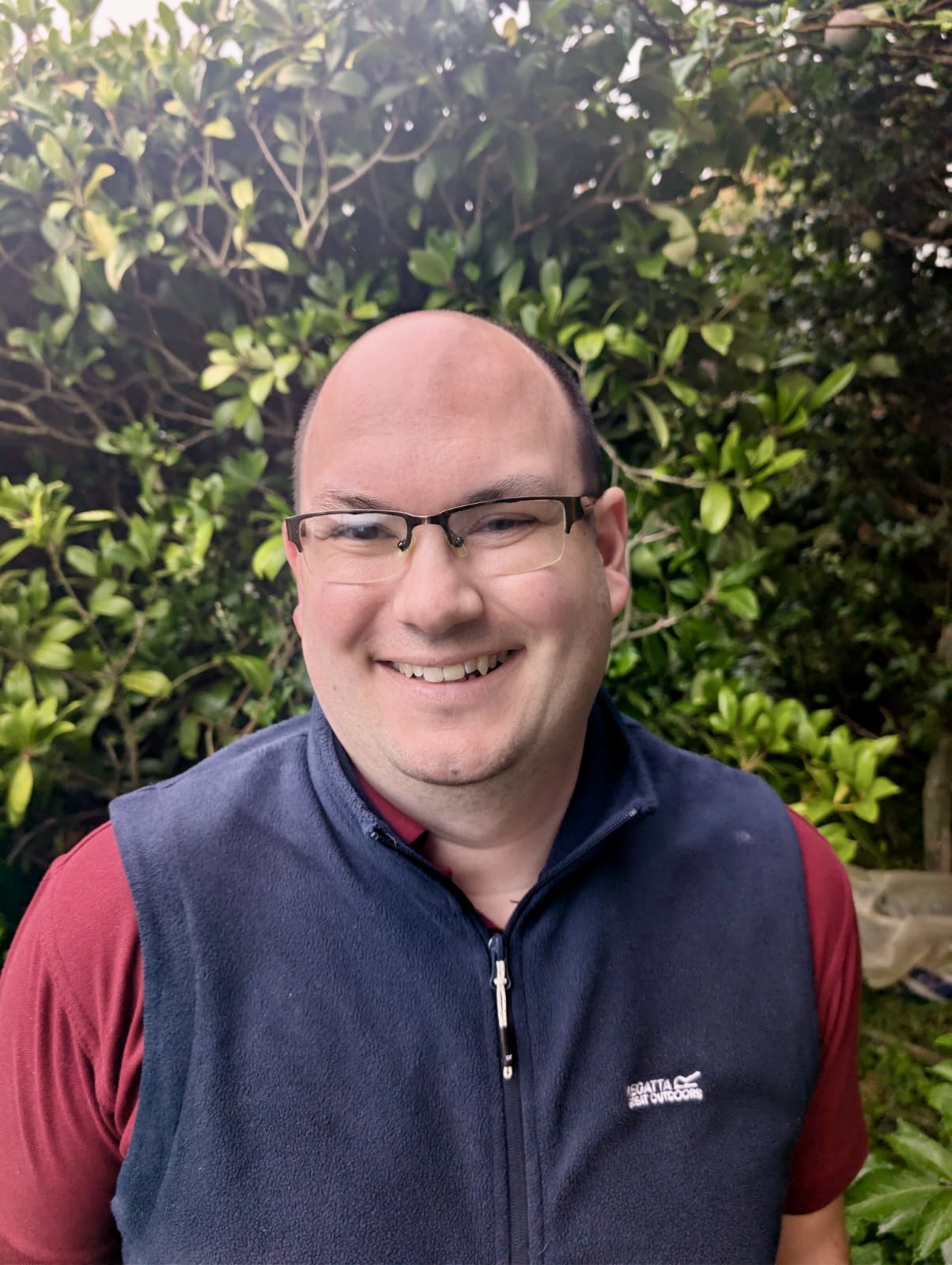
Mark Fincher is a trainee Advanced Clinical Practitioner and works in the Urgent Community Response Team at East Sussex Healthcare NHS Trust. Here he shares his #ChooseGeriatrics journey back to frailty.
Like many physiotherapists, I began my career with a focus on movement, recovery, and rehabilitation. But somewhere along the way, through conversations with patients, home visits, and moments of crisis, I found myself increasingly drawn to a particular group: older adults living with frailty.
Their stories, their lives, and their attitudes inspired me to truly listen and to place the person at the centre of everything. This shift in perspective was, for me, revolutionary. I began to feel a growing discomfort within the acute hospital setting, where the constant pressures to plan for discharge often left little time to understand what mattered most to each individual. Don’t get me wrong, the work that acute hospital teams do is nothing short of remarkable, and I have huge admiration for all those individuals who manage individuals acutely in their time of need. However, I wanted to slow down, to ask, “What’s important to you today?” and genuinely hear the answer.
This desire prompted a move into community care and gave me the perfect opportunity to become a Community Frailty Practitioner. Here, I was afforded the time to listen, to engage with people and their families, and to conduct holistic assessments of those living with frailty, and more importantly, to plan for any periods of ill health.
Over the past eight years working in community settings and now in urgent care, I’ve come to recognise the critical role we play at points of transition. The person who has had a fall but is determined to remain independent. The family unsure whether hospital admission is the right course. The older adult who is frightened, vulnerable, and simply needs someone to listen. In those moments, I’ve found purpose. With the excitement of starting a new role and becoming a trainee Advanced Clinical Practitioner, and with all the demands that come along with this, somewhere along the way, I had forgotten why I love doing what I do and the benefits it brings. It wasn’t until I was supporting our frailty virtual ward that I realised what I had been missing clinically: that ability to connect, listen, and plan based on the individual's wishes, which gave me satisfaction and fulfilment again. My passion for geriatrics is now to see the opportunity to preserve independence, prevent suffering, and give people back their choices. To quote an X post from the BGS a little while ago, “Older people have always worked, contributed to their families, and helped the wider community. In other words, history teaches us that older people have so much to offer.” This is why I #ChooseGeriatrics every day. Older people have so much to teach me, and I am grateful that I have been able to reconnect with this fundamental motivation.