Course Overview
This course covers both urinary and faecal incontinence in older people. We will look at the impact it has on the older population, the symptoms, causes, and the treatment options. There is an emphasis on the wider MDT, including the roles played by Nurses and Physiotherapists, as well as contributions from Urologists and Urogynecologists.
Each module features a number of cases studies and videos from a wide range of experts, who will take you through the treatment plan for each case. You will also find links to external resources to support your learning.

Why study this course
Course options
The elearning course is accessible for free for BGS members but charged at £150 for non-members
Participants can progress through the module chapters and undertake the multiple-choice questions.
Achieving 80% or higher in the assessment modules results in course certification.
The total course is approved for 10 CPD hours/credits. Approximate timings for individual modules are:
| Bladder Health: Stress Incontinence & Overactive Bladder | 200 minutes |
| Bladder Health: Lower Urinary Tract and Nocturia | 200 minutes |
| Bowel Health: Constipation | 100 minutes |
| Bowel Health: Faecal Incontinence | 100 minutes |
As a member, you can register for free access using the pink button at the side of this page.
You can access the course without being a member of the BGS. To do so, you need to create a Non-Member account and pay £150.
With an account, register using the pink button at the side of this page. You can join the BGS to enjoy the wider membership benefits.
| Not yet a member? Click here to join the BGS |
How to access the elearning course
-
Click on 'My account' at the top right corner of the page and then select the 'CPD and certificates' button (on the right hand side).
-
You will be able to see all registered courses which are currently running.
-
Make sure you click on 'Exit Activity' before you leave the course page to ensure you record your progress
Course Learning Outcomes
Module 1
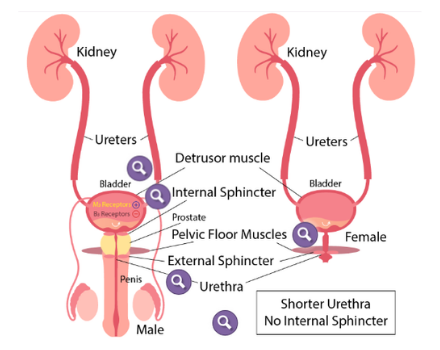
- Understand how urinary continence is maintained and the causes of incontinence in the older person
- Diagnose stress urinary incontinence and overactive bladder syndrome from a history and bladder diary
- Understand the role of a specialist continence nurse and specialist pelvic floor physiotherapist
- Recognise indications for pessaries and the role of the nurse specialist
- Recognise the role of the urologist and urogynecologist and understand when to refer to these specialists
- Understand the evidence base behind conservative, pharmacological, and surgical treatment options for overactive bladder syndrome
Module 2
- Differentiate between acute and chronic urinary retention through a history and examination
- Recognise risk factors for acute and chronic causes of urinary retention
- Understand indications for intermittent self catheterisation (ISC) with an awareness of when this can be offered as an alternative to a long term catheter
- To develop an approach for assessing the cause of nocturia, and to be able to explain this to your patient
- To develop a patient-centred, holistic treatment plan for a patient with nocturia
Module 3
- Describe the anatomy and physiology required for a normal bowel movement, and understand what conditions will affect this in the older adult
- List causes of constipation in the older adult and formulate a management approach to these
- Be able to describe to an older person how dietary changes can improve constipation, and describe the optimal toileting position to somebody
- Understand different classes of laxatives and be able to describe regimes for chronic constipation and faecal impaction in the older adult
- Recognise Incontinence Associated Dermatitis (IAD) and formulate a management plan for this
Module 4
- Recognise different causes of faecal incontinence in the older adult
- Recognise the role of a physiotherapist specialising in pelvic floor health
- Understand when to refer for specialist colorectal advice and what investigations they may perform and why
- To recognise surgical management options for faecal incontinence in both frail and non-frail older people