The British Geriatrics Society (BGS) is seeking an exceptional Editor-in-Chief (EiC) to lead the launch of a new medical journal. This is a rare opportunity to serve as the founding EiC, leading the journal's vision, editorial standards, and scientific influence from its inception. Supported by an established team of Associate Editors and editorial staff, the EiC can build a world-class journal that attracts high-quality research and makes a lasting impact on the global research community. The successful candidate will combine academic credibility, editorial leadership, and entrepreneurial vision to create an exciting new publishing space for clinical geriatric research.
About the journal
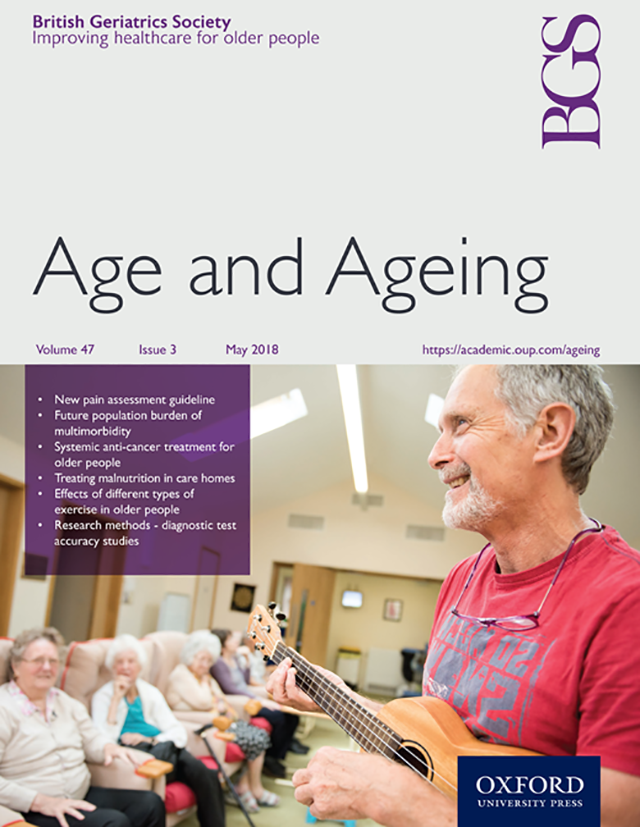
Age and Ageing Advances will be the second journal of the BGS with a planned launch in January 2027. As a sister journal it will benefit from the outstanding reputation of the highly successful flagship journal, Age and Ageing, the highest impact clinical geriatrics journal in the world.
Both journals will have the same remit to publish refereed original research, review articles and editorial pieces on geriatric medicine and clinical gerontology. Applying the same high-level peer-review process, Age and Ageing Advances offers an additional publishing platform for good-quality, ethically and scientifically sound submissions which have not met the high standards for novelty, relevance, or immediate clinical applicability for acceptance in Age and Ageing.
The Trustee Board of the BGS has agreed with Oxford University Press (OUP) to collaborate on publishing a second clinical journal of ageing research. They have agreed to do this because:
-
Age and Ageing is well positioned to provide a substantial transfer flow of rejected submissions to a sister journal.
-
In-house expertise and process structures, both editorial and operational, can be transferred from Age and Ageing to Age and Ageing Advances.
-
BGS and Age and Ageing have very good reputations in their fields, and a sister journal would benefit from that positive relational proximity.
-
Financial projections indicate that a sister journal would be a successful and sustainable source of income for the BGS.
Age and Ageing Advances will be a fully Open Access journal owned by the BGS and published by OUP.
It is estimated that Age and Ageing Advances will receive 100 submissions in its first year, rising to 450 per year by its fifth. Most submissions will be transfers from Age and Ageing, and this will include transfer of any peer review assets. Direct submissions (rather than transferred submissions) can be expected to increase over several years as the journal becomes more recognised.
About the role
The EiC will play a key role in establishing the new journal. They will oversee the peer review process and editorial policy and strategy to produce topical, relevant, high-quality content for readers. Scientific and editorial expertise will be required to identify suitability for publication, as will an ability to work constructively with authors, peer reviewers and Editorial Board members to further improve the quality of individual articles through the process of peer review. As founder EiC, they must be ready to take the additional challenge of establishing a new-launch journal into the field and furthering the reputation of the BGS as a publisher of high-quality scientific content. The EiC will need to encourage direct submissions and develop a commissioning strategy to attract expert reviews, topical commentary, and Best Practice articles.
Time commitment:
It is anticipated that the EiC will initially spend the equivalent of one clinical Programmed Activity (four hours) each week working on the journal, but the timing can be flexible to fit around other professional activities. It is expected that the time commitment will increase as the journal develops, up to two PAs per week by the second or third year of operation
Remuneration:
Annual remuneration will be the equivalent of one PA session (4 hours) per week for the first year, rising to two PAs (8 hours) in later years. This will be paid to the EiC or their releasing institution, subject to the terms of engagement. The EiC’s contract with the BGS will be for a period of five years; this may be extended by up to one year by mutual agreement.
Key skills and essential experience
The founding EiC will need to be highly motivated to launch and establish this new journal. The prospects for Age and Ageing Advances are very good, but to achieve its full potential, considerable effort will be required from the EiC. The successful candidate will need all the skills of an editor but also be able to act as an active ambassador for this new-launch journal.
Essential experience
Applicants must have:
-
Wide knowledge of the field of geriatric medicine and gerontology and of related research
-
Demonstrable credibility as an academic/researcher in the field of geriatric medicine/gerontology
-
Experience of delivery of clinical care, for example within the NHS
-
A track record in publishing research in the field of geriatrics and gerontology
-
An understanding that this new launch journal will have an evolving model. Growth is expected and the EiC must be ready to scale-up time commitment from one to two PAs/week.
Editorial skills and experience
The core editorial requirements for this role will include:
-
Extensive experience as a peer reviewer, associate editor or editor for a reputable journal
-
Excellent judgement and an ability to recognise the value of submissions and weigh their publishing potential
-
Proactive commissioning of topical expert reviews, commentaries, Best Practice articles, New Horizons articles, and other editorial content
-
A working knowledge of online peer review application ScholarOne Manuscripts or willingness to undergo training to the required standard.
-
Governance experience through an editorial board or other board with the ability to guide a team of Associate Editors
-
Establishing a sustainable working method for the role of EiC and for the editorial team to maintain long-term success of the journal
-
Familiarity with the academic publishing commercial environment and current issues around Open Access
-
Readiness to make changes in editorial process and strategy in response to developments within the journal publishing field
-
Ability to respond to occasional appeals and higher-level queries and willingness to adhere to professional and ethical standards in publishing.
Ambassadorial skills
The EiC needs to have:
-
Enthusiasm for establishing a new journal and understanding of the opportunities and challenges facing a founder EiC
-
Willingness to act as an ambassador, proactively building awareness and recognition of the BGS’s second journal
-
Access to UK and international networks that can be called upon for peer review and editorial engagement
-
The ability to deliver a commissioning strategy and attract high-quality content from well-known authors to establish the impact and reputation of the journal
-
Readiness to meet the challenge of not having a Journal Impact Factor (JIF) until the 4th year of publication*; and the ability to build recognition and demonstrate quality to attract readers and authors and stimulate citations for the first JIF
-
Willingness to collaborate and work flexibly with the Age and Ageing editorial team to maximise synergies and the shared editorial remits, ethos, and strategy
-
Willingness to write a bi-monthly column for the BGS newsletter, AGENDA featuring journal content, in collaboration with the EiC of Age and Ageing.
Contractual requirements
-
Membership of the BGS Journals Editorial Executive Committee; report to and lead discussions at four online meetings per year.
-
Membership of the Age and Ageing Advances Editorial Board.
-
Applicants are likely to be familiar with the BGS and to be a member, but this is not an essential requirement of the role; they would however be expected to join the BGS if appointed.
-
While they need not be based in the UK, they are expected to be available during UK working hours as required.
-
Availability for weekly one-hour online meetings with the Editorial Manager.
Support and governance
The BGS provides the EiC with support, including an established full-time Editorial Manager and two part-time Editorial Assistants. Editorial operation is provided by the Age and Ageing Advances Editorial Board, and governance, policy, strategy, and business matters are overseen by the BGS Journals Editorial Executive Committee. The EiC will sit on both Boards and receive practical guidance from the BGS Journals Chair (who brings experience as the former EiC of Age and Ageing) and the EiC and Deputy Editor of Age and Ageing. Age and Ageing Board meetings will provide a space for the EiC to raise and discuss issues and be supported by colleagues across the BGS journals. Ad hoc guidance will be available to the EiC on a wide range of subjects, methodologies, disciplines, and geographical regions from our existing contacts and networks. The EiC will work closely with the publisher, OUP.
The Editorial Board of Age and Ageing Advances will be formed of approximately 20 members of the existing Age and Ageing Editorial Board who have expressed an interest in serving across both journals. They bring with them experience and expertise and are known to be active and collaborative editorial team members able to give practical support to the EiC.
The EiC will attend meetings of the BGS Journals Editorial Executive Committee as a member. The Editorial Board of Age and Ageing journal has six-monthly meetings to which the EiC is invited to attend (as a non-member). Due to the overlap of membership, the Editorial Board of Age and Ageing Advances will not require Editorial Board meetings and matters will be covered by the agendas of both the Age and Ageing Editorial Board and the BGS Journals Editorial Executive Committee meetings.
Applications
Applicants should send a CV and personal statement in support of their application for the position of EiC to aa@bgs.org.uk by 30th September 2026. Online interviews will be held in the first week of October. If you would like to discuss this role with the EiC and Deputy Editor of Age and Ageing journal, please request via that email address.
Notes:
Illustration of the editorial process:
The editorial process design is modelled on the very successful operation of Age and Ageing and will be facilitated by our existing Editorial Manager. Submissions will be managed via ScholarOne, an online peer review application. The EiC can expect their work to be structured into five main process stages:
-
Initial assessment (“triage”) on an estimated 10 new submissions per week. Aiming for an immediate rejection rate of 50% (“desk rejection”).
-
Assignment to Associate Editors of the remaining five new submissions. Matching AEs to submissions based on their topic and/or methodology expertise. Offering guidance and support
-
Selection of peer reviewers. Using our substantial peer reviewer database and your own networks to recruit the help of peer reviewers.
-
Make the first editorial decision on an estimated five manuscripts each week. Describe revisions and support authors to improve their work and use your judgement to weigh limitations against interest and importance for readers.
-
Make the final editorial decision on an estimated five submissions per week which have received peer review and the assessment of an Associate Editor.
All operational and process matters are managed by the Editorial Manager, who the EiC will meet with weekly to monitor progress and resolve issues.
Timeline to launch:
| 2026 | |
| September |
Set up OUP internal systems including dedicated transition team. Marketing and branding plans agreed across BGS and OUP teams. |
| October | Production systems and staff set up. |
| November |
Announcement at BGS Autumn meeting (Editor-in-Chief named, open for pre-submission enquiries). ScholarOne submission site build and operational system set up. |
| 2027 | |
| January | Journal website launched. ScholarOne site open for submissions. |
| April |
First content published to an “in-progress” first issue. Marketing around first journal content launch. |
| 2029 | Expected first indexing (Scopus, Pubmed, Web of Science etc), a significant benefit to credibility and visibility. |
| 2031 | Expected first Journal Impact Factor score*, a significant benefit to reputation and author attraction. |
*A new journal usually receives its first JIF in its 4th year of publication. The BGS and OUP will be working to expedite this important quality marker, along with other journal indexes and registrations which are essential to journal validation and credibility.