The BGS Special Medal is awarded to a non-clinical professional who has made an outstanding contribution to promoting the health and wellbeing of older people. It recognises someone who has gone the extra mile to support older people and celebrates their commitment and achievements.
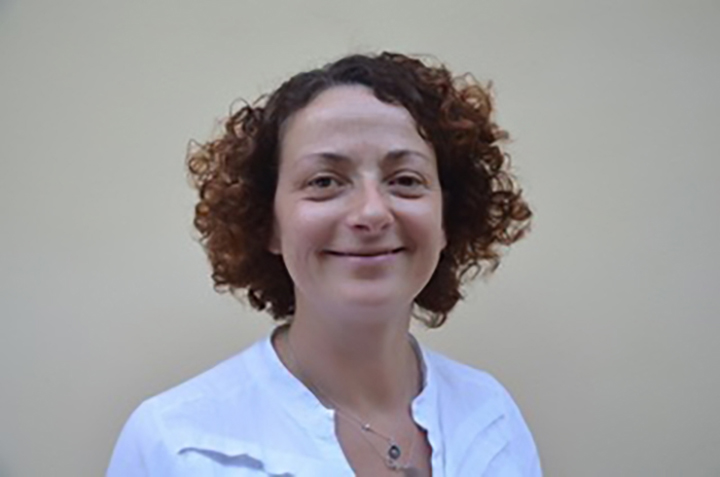
The award winner for 2020 was Bex Townley. Bex is an exercise professional of 30 years, a tutor, assessor and a director of Later Life Training. Here she reflects on her motivations, the outcomes of her work, and her role supporting older people to be active during the COVID-19 pandemic.
Can you tell us about your role at Later Life Training?
We are a small not-for-profit business delivering training and education to health, exercise and care professionals across the whole of the UK and overseas. All of our training courses are related to evidence-based exercise programmes for falls prevention, physical activity, and sedentary behaviour and of course supporting behaviour change. My role includes supporting our tutor and assessor team, development of our training and education programmes, communicating with service leads, commissioners and funders to plan our training, and supporting successful implementation, such as facilitation of in-house quality assurance and fidelity to delivery.
What training did you undertake to become a Postural Stability Instructor and why are you passionate about supporting physical activity literacy and engagement in older people?
The fitness sector has undergone significant change and progress in the past 20+ years. My fitness career began in 1988 when I joined the military aged 17 and a half as an Army Physical Training Instructor. After 5 years of training soldiers, my career in civilian life has seen me continue my commitment to training and personal development, in line with evolving sector requirements. Like thousands of other exercise professionals across the UK, I hold a range of exercise and fitness qualifications (personal training, group exercise training etc.) that underpin further training specialisms. I completed my Postural Stability Instructor training with Later Life Training in 2006 and here started my journey working with older people at risk of falls. In addition to other specialist training I had undertaken, the following 16 years saw me working in job roles working within clinical exercise pathways with referring health professionals from cardiac rehab, pulmonary rehab, life after stroke, neurological conditions and dementia to name but a few.
Working with individuals and groups of individuals living with long term conditions (who have often endured life-changing events) is an eternal learning journey. But one thing is for sure: ‘getting this job right’ reaps nothing but rewards for all involved. ‘Passion’ is an over-used word in this context I think; for me it’s more about a kind of necessity – a sense that this job ‘has’ to be done, because when you know what I know (and many others like me know) it’s a no-brainer: if we present accurate information in a totally individualised and tailored way, we are able to offer a choice that may not have been realised before. I’ve lost count of the number of times that people have said to me, ‘why was I never told this?’. But if you want to call that a kind of passion - I’m passionate for one simple reason; when we get the ear of people, when we get a foot in the door to being heard and trusted, movement and exercise sell themselves, it’s a win-win. For fellow PSIs (Postural Stability Instructors) and OEP Leaders (Otago Exercise Leaders), getting that foot in the door, and getting a person’s interest is THE most critical part of the journey. This job is as much about conversations as it is about exercise programme design, because no one person is the same. Exercise design is arguably the easy bit. It’s supporting people to see their own potential that’s the challenge, and when they do, that’s the reward... it’s a kind of magic.
What have been the specific challenges and rewards of being a Postural Stability Instructor during the COVID-19 pandemic?
Later Life Training have trained thousands of PSIs and OEP Leaders since 2003. For these people and the broader exercise professional sector workforce, the pandemic has hit hard. The closure of fitness facilities and community venues has meant that the people who ‘critically need’ progressive strength and balance training the most (to maintain the ability to perform everyday tasks) have spiralled into further functional decline. Exercise services and exercise instructors have had to work hard and in new ways to continue to support their communities via virtual means. Delivering exercise virtually to older people in their homes brings different considerations and challenges. To this end, Later Life Training provided comprehensive guidance for PSIs trained by us, early on in the first lockdown. It has been the emergence of this new medium that has posed challenges and presented new potential to ‘reach’ people that prefer this method of delivery and experience.