Report
Hover me to read more

BGS roundtable: Overcoming barriers to age-attuned care

Published date
Last updated

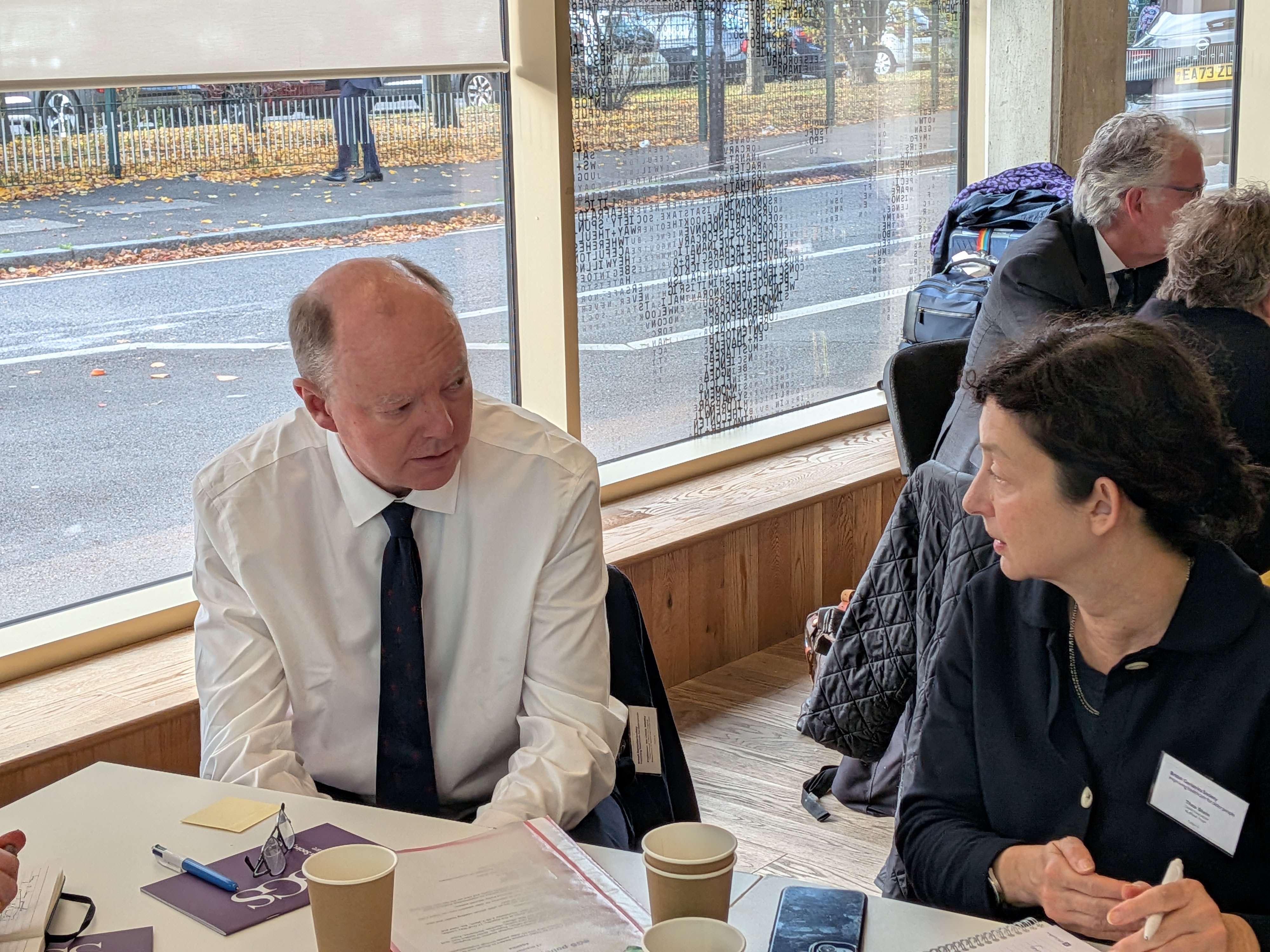
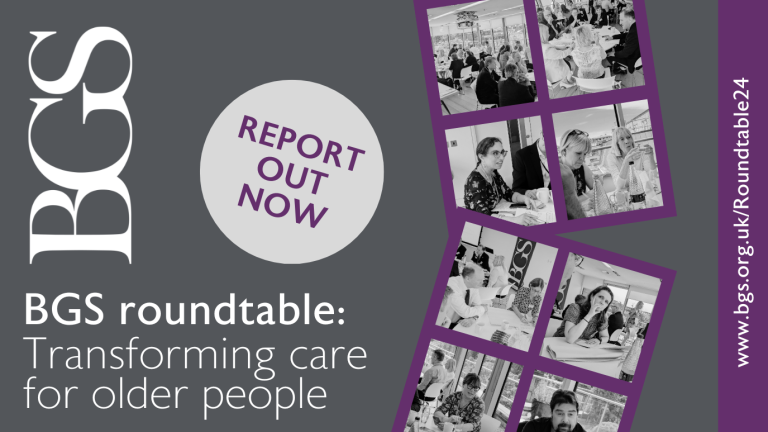
This report summarises the second policy roundtable hosted by the British Geriatrics Society (BGS) on 22 October 2025. This event was a follow-up to the event held in summer 2024 and was intended to build on the themes discussed then, recognising the change in context brought by the new Government and the publication of the Ten Year Health Plan. We were pleased to welcome senior representatives from NHS England, medical Royal Colleges, think tanks, charities and professional membership organisations to our roundtable. 

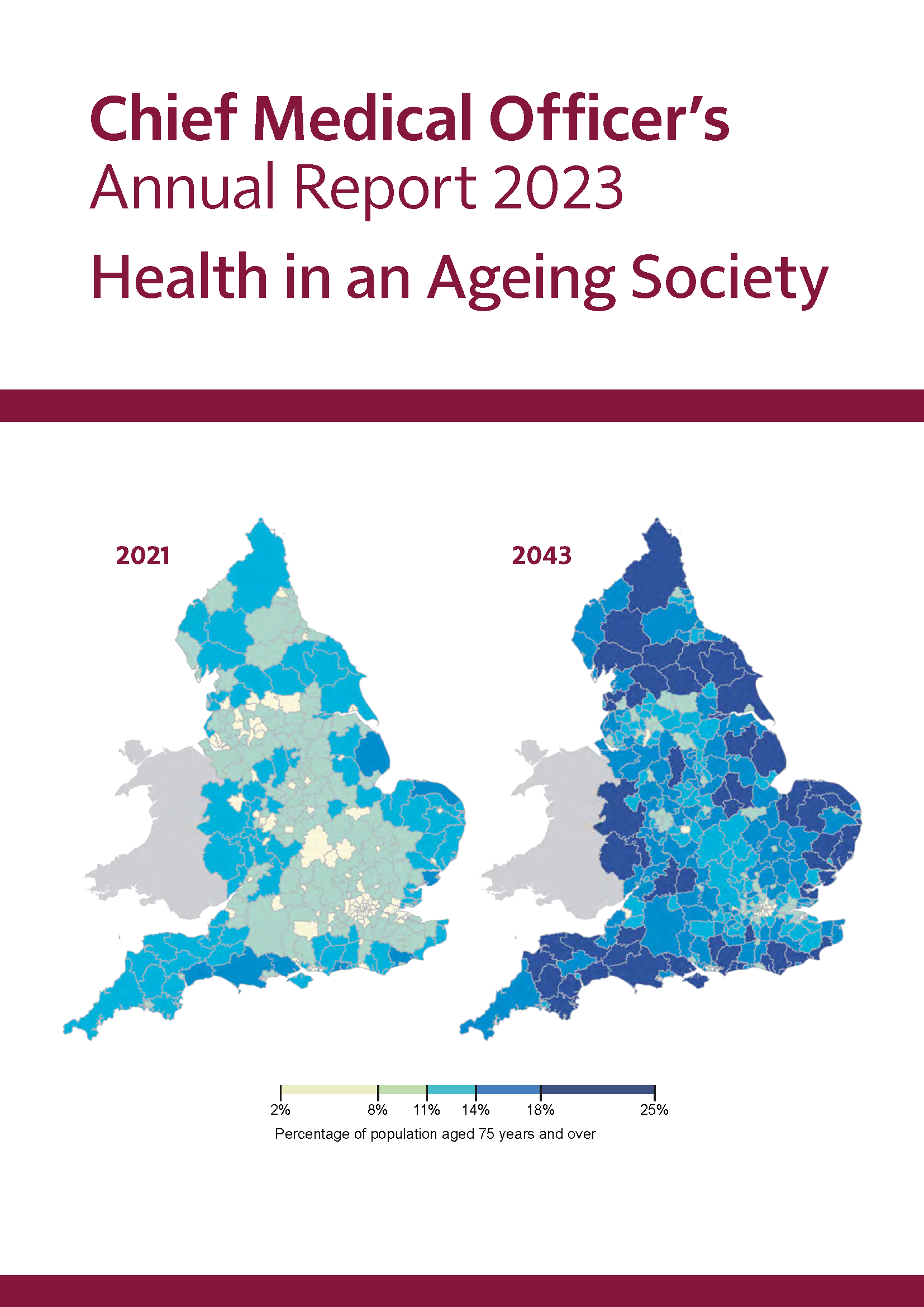
In June 2024, the British Geriatrics Society (BGS) hosted a roundtable event with senior leaders from across health, social care, charity, think tanks and the civil service to discuss the challenge set out in the Chief Medical Officer’s 2023 report about health in an ageing society. As the BGS, we have a unique role to play in bringing together a range of stakeholders to discuss issues related to healthcare for older people. After that first roundtable, we committed to convening the group again. 

In October 2025 we brought together a similar group of leaders from across sectors to discuss older people’s healthcare. As before, our roundtable focused on the health system in England, though the issues discussed have wider relevance for the other countries of the UK. The purpose of our roundtable was to discuss how to overcome barriers to implementation of age-attuned care.  

This report is intended to be a record of the event, sharing the discussions that were had and key advice for systems leaders aiming to ensure healthcare systems deliver the best care possible for older people now and for all of us as we age.
Embedded PDF

The context of older people’s healthcare has changed since last summer. We held our first roundtable event during the pre-election period and the new Government has now been in power for one year. The Government set out its priorities for health and social care around the three shifts of hospital to community, sickness to prevention and analogue to digital. The announcement of a Ten Year Health Plan came very early in the Government’s term with an extensive public consultation exercise to feed into its development.

The Ten Year Health Plan was published in July 2025, setting out an ambitious transformation programme for the NHS to enable it to be sustainable for the long term. This included a big focus on neighbourhood health with the aim of providing more care outside of hospitals. This has the potential to transform services for older people’s healthcare. Since the roundtable, the 2025 Budget has been delivered, reiterating this commitment to neighbourhood healthcare with a promise of 250 new community health centres, 120 of which are to be operational by 2030.1 Media reports state that 50 of the 120 are expected to be upgrades to existing estate and the other 70 are expected to be new builds with the majority funded through a public-private partnership model.2 We were pleased to have Dr Claire Fuller, National Medical Director, attend our roundtable and update delegates on progress on neighbourhood health.  

The Ten Year Health Plan also focuses on the transition from analogue to digital with emphasis on making better use of the NHS app and AI. If implemented well, this could be transformative for older people. Interoperability of systems and patient records would improve efficiency across the health and social care system and reduce the need for older people to repeat themselves to multiple healthcare professionals. Implementation of this commitment will need to focus on ensuring that digital exclusion is not exacerbated and that face to face access is maintained for those who cannot or do not wish to access services digitally. Implementation will also need to address concerns around failing IT across the NHS and social care. The recent Budget committed £300million to NHS technology and we look forward to the publication of more detail around how that money is to be spent.

There is also huge potential around prevention for older people. A focus on supporting older people to remain well in the community would result in better outcomes for individuals as well as reducing demand for health services both in primary and secondary care. The commitments in the Ten Year Plan about sickness to prevention are confined to children and working age people with a particular focus on productivity and ensuring that adults are well enough to work. As plans for this commitment progress, it will be important to ensure that all population groups are included, to ensure the biggest impact. 

The Ten Year Health Plan committed to the publication of a revised NHS Workforce Plan. A consultation for this Plan was conducted over autumn 2025. This consultation did not focus on numbers of healthcare professionals but rather on the modelling that must be taken into account when planning the future workforce and on digital solutions that are already in use across the NHS. It is expected that the revised workforce plan will be published in spring 2026.

Our last Roundtable report highlighted that a sustainable solution to the social care crisis remained elusive, despite promises from numerous Governments. It is disappointing to note that this is still the case. The current Government has commissioned Baroness Casey to conduct a commission into social care which is expected to report in two phases. The first of these should be in 2026 with the final report in 2028. The timelines of this commission have been widely criticised. Many across the sector feel that there have been several commissions and inquiries into social care in the last 20 years. What is actually needed is action on known recommendations from the Government, especially given their sizeable majority which should make it easier to make progress in this area.

There is also a lot of change in the leadership of the NHS with an announcement in March 2025 that NHS England will be abolished. Most of the functions will move into the Department of Health and Social Care. More generally, the NHS is operating in a challenging financial environment, both nationally and regionally, with funding being extremely stretched. Integrated Care Boards have been asked to make workforce cuts of 50%.  

There is clearly a significant challenge in implementing such an ambitious transformation programme while the system is under such immense pressure. Health and care staff are expected to deliver ‘business as usual’ care while simultaneously undertaking considerable system change. There are pockets of excellence in older people’s care and BGS members know what good care looks like for older people. However, there remains too much regional variation and not everyone has access to the same high-quality care. We believe that through collaboration and sharing of evidence and best practice, better care can be available for all older people, where and when they need it. 

Embedded PDF

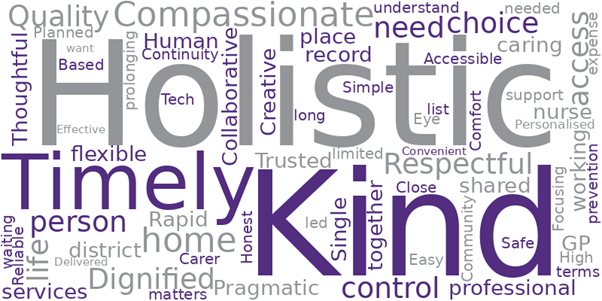
We started our roundtable by asking people to describe, in one or two words, what they would want care to be like when they are older. The results of this exercise are shown in the word cloud (right) and highlight, perhaps unsurprisingly, that most people would value care that is kind, timely, holistic and compassionate. Other themes (expressed in various ways) included the importance of autonomy and control with care that is person-centred, in a place of the person’s choosing and focused on what matters to them.  

Many people also shared their experiences of caring for ageing parents and the type of care that they want their parents to receive or would have liked if things had gone better. This activity highlighted the universality of old age – we are all ageing and to reach old age is something that should be celebrated.  

These themes are not new and they should be easy to get right. However, the system so often fails to provide kind, compassionate, holistic care to older people. This results in older people experiencing care that falls short of the standards expected, including long waits in emergency departments, being treated on trolleys in hospital corridors and getting stuck in hospital, deconditioning while they wait for social care or rehabilitation to be arranged.

Delegates were shown a video from the BGS Frailty Lead, Dr James Adams, to hear about how a Trust in Surrey created a frailty-attuned service. In this video, Dr Adams highlighted some of the barriers his team had faced and how they had overcome them. He described how the service is continuing to develop and learn, even now that it is well-established. This was intended to show delegates that excellent frailty-attuned services are operational across the country but that many of them had to deal with challenges in their development. Access to high-quality, frailty-attuned care is not yet universal, with availability often dependent on where a person lives and what facilities are provided near their home.

Embedded PDF

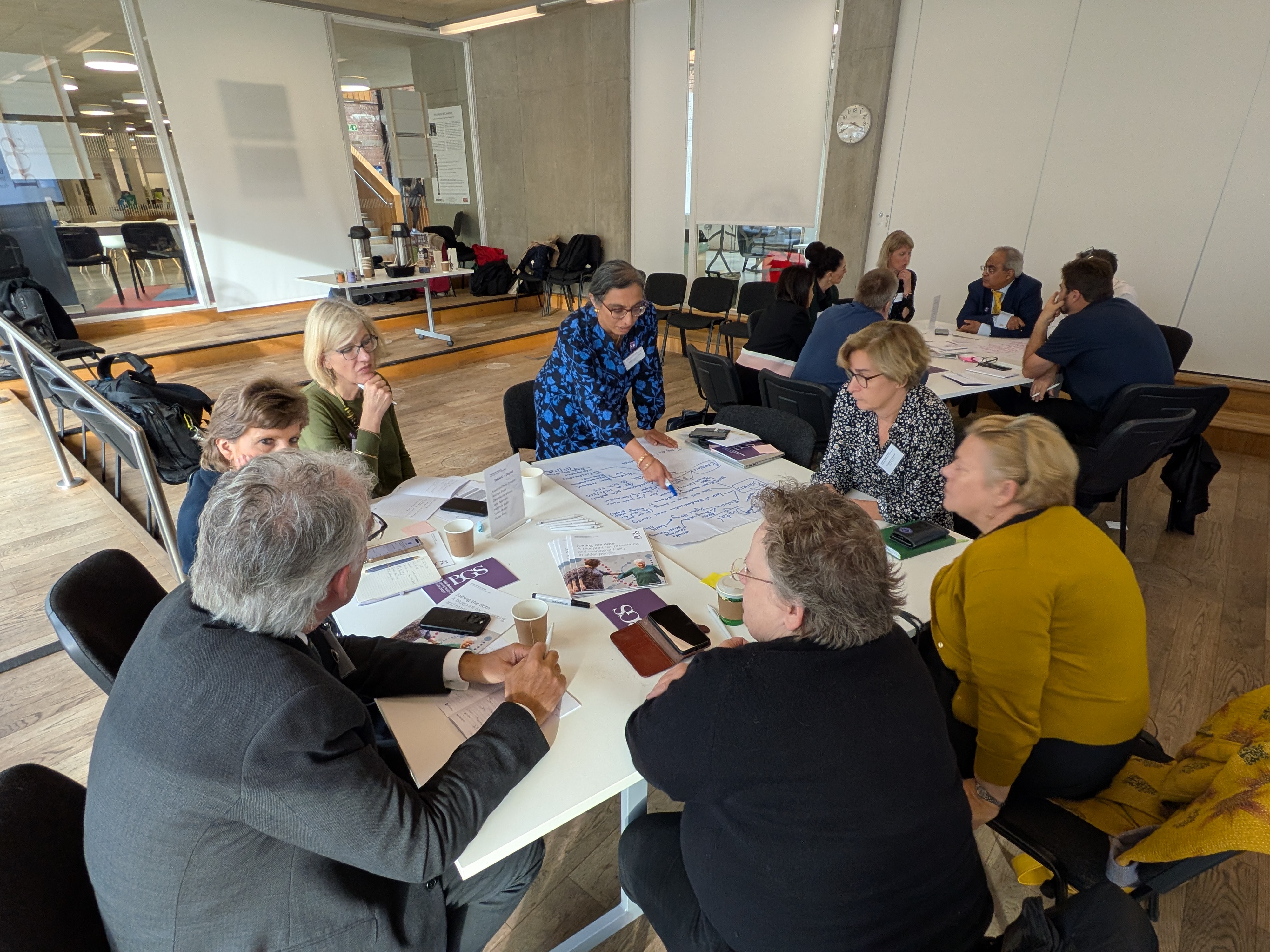
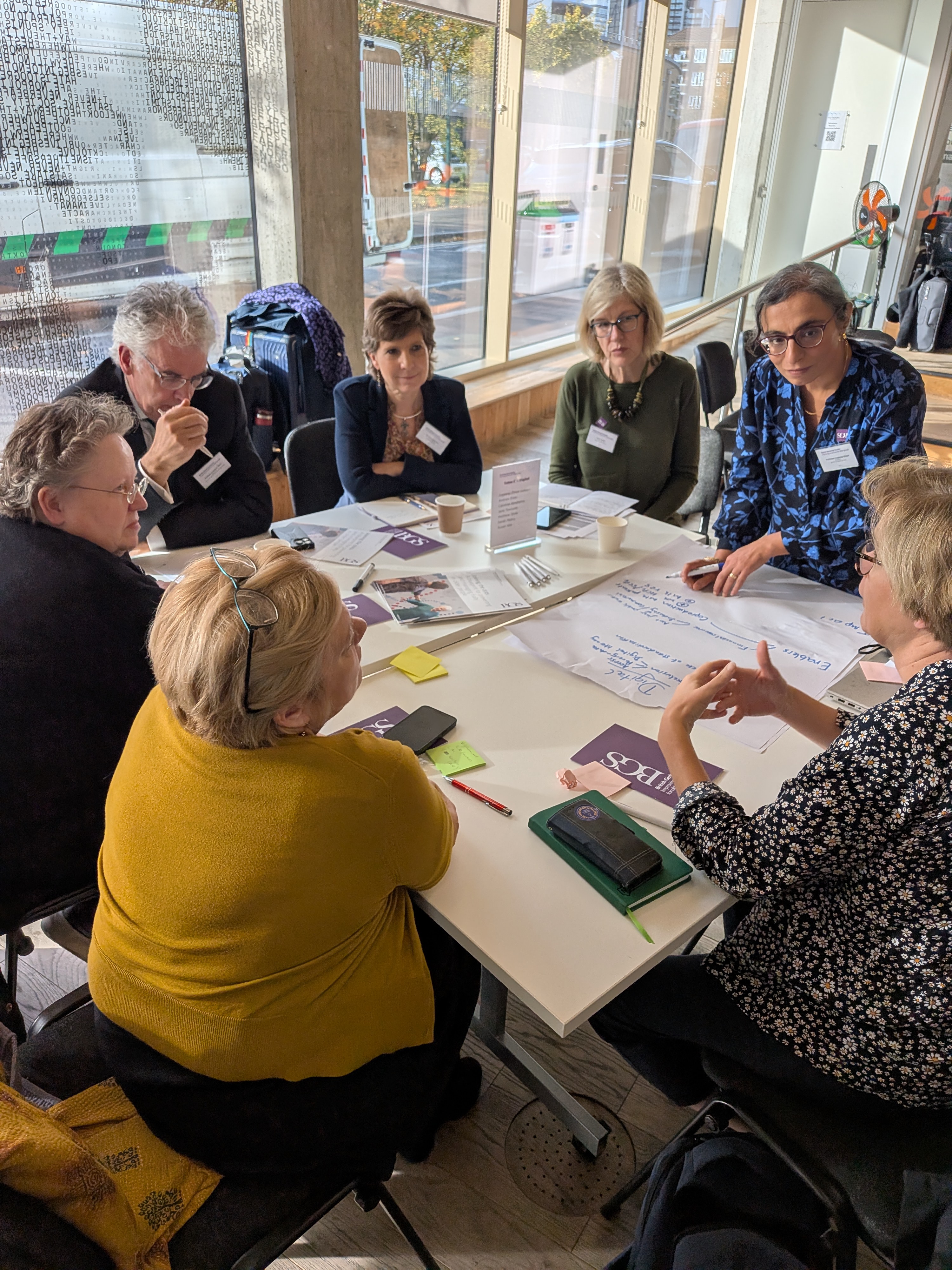
Our delegates were allocated to tables to discuss the three shifts from the Ten Year Plan alongside workforce and to explore their relevance to older people’s healthcare. Participants were asked to identify barriers to improvement and enablers to help overcome those barriers. Tables were briefed to assume that funding would remain static and that systems would need to overcome barriers to implementing change with resources they already have available.  

Culture change alongside system change 

The group discussing community services highlighted the importance of culture change to go alongside system change. They particularly flagged that all too often the importance of bringing people along on a change journey is underestimated. This includes patients and staff, all of whom must understand the reasons for change. The group also emphasised that adult social care must be included in the transformation journey with relationships across sectors increasingly important. The current system is fragmented, making it difficult for patients to navigate different services and to transfer between acute and community services. 

Care planning provided at home 

The community group felt that undertaking processes such as advance care planning and structured medication reviews with patients when they are relatively well and at home could improve patient experience and help to reduce demand on other parts of the system.  

Advance care planning helps people to make decisions about what they want to happen in a situation when they are unable to express their views. This can include decisions about whether or not to go to hospital in an emergency or whether they wish to be resuscitated. More people documenting these decisions in advance can result in fewer unnecessary and unwanted conveyances to hospital. The group felt particularly strongly that the advance care planning process should be digitally enabled with plans easily accessible by healthcare professionals across settings and across health and social care.

Structured medication reviews are intended to assess the medications that an individual is currently taking with a view to stopping medications that are no longer clinically necessary. This has both financial and environmental benefits as there is less medication wasted. There are also significant benefits for the individual as they are less likely to experience adverse events from their medication, such as falls. This in turn has an economic upside as there is a reduction in treatment required for adverse events.  

Long-term vision for prevention 

Those discussing prevention highlighted the challenge of thinking long-term rather than constantly moving from crisis to crisis. Prevention requires sustained funding over a period of many years and results are unlikely to be seen within an election cycle. This makes it difficult to get political buy-in for prevention initiatives, especially those targeted at older people. The group felt that the narrative around prevention for older people is often overly negative and needs to be reframed to focus on the positives. There is also a need to focus on secondary prevention in addition to primary prevention as data shows that this can make a real difference to outcomes. There needs to be a change in the national conversation away from years spent in ill health towards shortening the period of time people live with a disability or illness. The benefits of maintaining physical and brain health for older people must be emphasised.  

There was concern that initiatives that already exist to prevent ill health and reduce inequalities, such as the Core20Plus5 frameworks, are not widely understood by those who need to use them. The BGS has recently published a Core20Plus5 framework for older people and it will be important to consider over the coming months how this is implemented locally and helps those working to reduce inequalities on a local and regional basis.

There was acknowledgment from the group that many of the factors influencing prevention of ill health in older people are not directly related to the provision of healthcare. This includes housing, nutrition, hydration, physical activity and social connectedness. It is important that agencies across health, social care and the voluntary and faith sectors work together to support older people to live independently and prevent ill health for as long as possible. 

Interoperability of digital systems 

The biggest barrier around the shift to digital is the lack of interoperability of systems across health and social care. BGS members regularly speak about the challenges around care records not being accessible across primary and secondary care and records not being shared with social care colleagues. This lack of interoperability leads to patients having to tell their story multiple times to different professionals and creates an inefficient system. This was identified as the biggest priority around the shift to digital – any other initiatives in this area are destined to fail if this is not improved.

The shift to digital is also accompanied by a warning that this must not make services worse for any population group. Older people are particularly at risk here as they are one of the groups most likely to be digitally excluded. It will be important to ensure that face-to-face services remain accessible for those who are unable or unwilling to use digital technology. Delegates highlighted that the shift to digital should not be at the expense of who cannot use digital technology – digital services should work well for those who can and want to use it, freeing up capacity in face-to-face services for those who still need them.

The group also highlighted that digital technology intended to help older people should be created in partnership with older people. Those who design technology products are typically not from an older demographic and there may be functionality issues that would not occur to such designers. The group also raised concerns about the ethics of digital technology, particularly remote monitoring, that promotes surveillance of older people. It was noted that many older people are living with dementia and other cognitive impairments and therefore may not have the capacity to consent to the constant surveillance that may be involved with remote monitoring. 

A truly multidisciplinary, multiprofessional workforce 

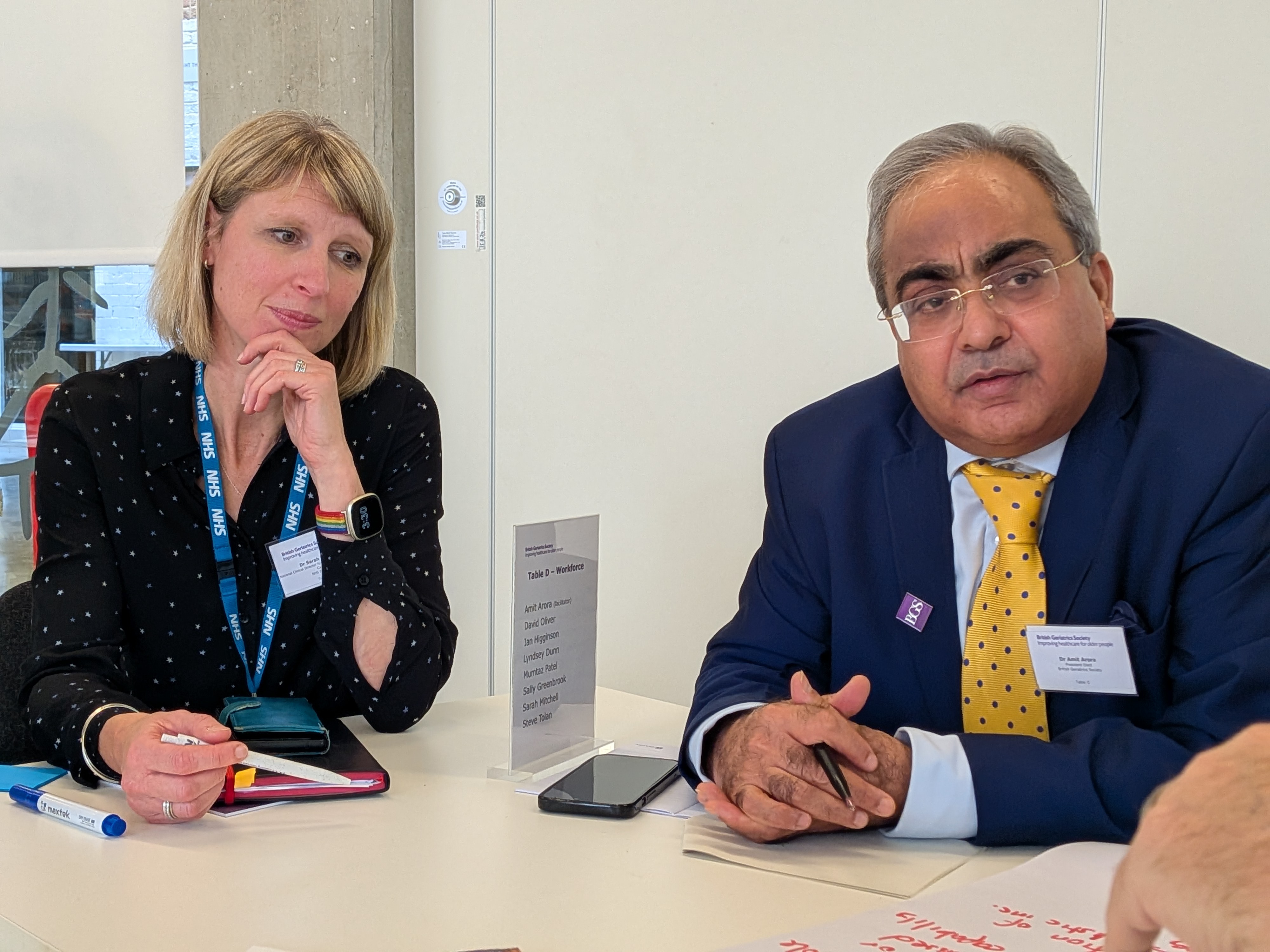
The group discussing workforce raised concerns that the older people’s healthcare workforce is still trapped in professional silos rather than focusing on ensuring that teams have the skills needed to care for older people. It was identified that this could be overcome by optimising the scope of roles and making them focused on skills and capabilities rather than professions or specialties.

The importance of continuity of care was also highlighted. Many older people value seeing the same healthcare professionals whenever possible. The care coordinator role was proposed as a solution to this, helping older people to navigate the system and transfer between services. This is particularly important for people who have needs beyond healthcare such as social care and housing.

The group felt quite strongly that career pathways currently do not allow people working in the community to easily pursue non-clinical careers alongside clinical commitments. This includes those who might want to pursue a career in research. It is felt to be of particular concern as older people’s healthcare in the community is an area where research is lacking. This has an impact on retention of staff in the community and is seen to put those working in the community at a disadvantage to their colleagues working in acute settings. Retention of community staff could be improved by supporting those working in the community to conduct research or take on other non-clinical roles alongside their clinical work. 

Embedded PDF

In the final session of our event, we asked the groups to come up with their advice to senior leaders who are developing age-attuned services and to identify the priority issues for those making decisions over systems and resources.

The importance of personalised care and being open with patients about what is realistic and possible was raised as a key priority. This includes conversations about what matters to individuals and often valuing quality of life over length of life. People should be supported to live independently into older age with the aim of reducing the amount of time spent in ill health or with disability. In order to achieve this people must be socially connected and have adequate housing and nutrition to remain healthy. In order to achieve joint working and better outcomes across health and other services, the current fragmentation that exists between health services, particularly those based in the community, and local authority and voluntary and community services will need to be addressed.

Another key tenet of personalised care is the importance of honest conversations with patients about what matters to them and what is realistic and possible for them. This might mean that hospital admission is not always necessary or beneficial. Advance care planning is crucial in order to have conversations with individuals before they become unwell. It is important to ensure that services are in place in the community so that people who are not admitted to hospital have access to appropriate care at or near their home. High-quality care closer to home, including urgent community care, serves older people much better than the difficult journey to hospital and long waits for emergency care or discharge following admission.

A central theme to come out of this activity was one of hope and a feeling that provision of better services is possible. This is how change must be framed in order to inspire staff and the public to support it. Delegates also emphasised the importance of relationships and building connections across services to ensure that different perspectives are taken into account when restructuring a service and the new service benefits both patients and staff. Strong clinical leadership is important for supporting change agendas.

Delegates highlighted the importance of joined-up care and pointed to generalists to lead the way in this space. Older people often experience disjointed care, requiring them to repeat information many times and leading to inefficient care. Generalist specialists, like those working in older people’s healthcare, have a role to play in helping to establish what matters most to the individual and prioritising care based on a realistic understanding of the complexity and trade-offs in treating multiple long-term conditions. It is important that healthcare professionals from other specialties understand this holistic, person-centred approach and how to care for older people living with frailty and other long-term conditions associated with older age.

A strong message for system leaders is around valuing the entire workforce. This includes ensuring that people are renumerated appropriately, have opportunities to progress and can participate in research if they wish. A workforce that feels valued will be better able to provide compassionate, person-centred care. Good workforce planning is a crucial component of this. Systems need to assess the needs of their population and how those needs will change in coming years to ensure that they have staff with the appropriate skills to care for the patient population of the future. It was felt there is insufficient priority given to planning ahead for the healthcare needs of our ageing population.

System leaders need to ensure that they value the care sector, including both paid and unpaid carers. Social care supports older people to remain independent at home, reducing or delaying the need for medical care. When people are admitted to hospital, timely provision of social care can mean that they are able to be discharged when they are well enough to leave hospital and do not get marooned.  

System leaders and politicians must remember that change takes time and not to expect immediate results. This is a particular challenge for politicians who may wish to see change within an election cycle. Leaders need to be bold, decide on a course of action and stick to it over the long term, rather than changing course because results have not appeared rapidly enough. 

Embedded PDF

Our roundtable event served to highlight the universality of older age. Ageing is a triumph both on a societal and an individual level. Yet too often society views older people as a burden and older people themselves can have an overly negative view of older age. While health is not the sole contributor to this, if people are supported to remain in better health, they are more likely to be able to live well and have a positive experience as they age.

It is a very tough time in the healthcare sector with a lack of funding at both a national and local level, an ongoing crisis in social care and the system under extreme pressure, resulting in unsafe and undignified practices such as care being provided in non-clinical spaces at hospitals across the country.  

However, the attendees at our roundtable embraced the challenge of overcoming barriers to changes and identifying enablers. They felt that care for older people could be transformed and that there were plenty of examples of this already happening. They felt the evidence base for good care was clear and the solutions known. Together as leaders from health and social care, charities, think tanks, Royal Colleges and as the specialty society, we now call on system leaders to work with us to implement age-attuned health systems. Older people use health and care services more than any other population group. Focusing on getting the system working well for this group will result in reduced emergency and unplanned care for them and improved health outcomes. This in turn will free up space in the system, reducing waiting lists, discharge delays and corridor care, improving services for all population groups and saving NHS resources.  

On the part of the BGS, there was again a clear message from the attendees of how much they valued being brought together from across different sectors for the event. In particular the convening of health, social care and voluntary sector bodies was appreciated, recognising all have a part to play in delivering better care for older people.  We acknowledge our role in bringing organisations together in this way and commit to doing it again in the future.

The NHS Ten Year Plan provides a framework for transforming the care of older people. It will not be possible to reform the NHS without a clear priority on how the system can work better for those who use it the most. The BGS and its allies stand ready to contribute to this vital task. 

Embedded PDF
  1. HM Treasury, 2025. Budget 2025. Available at: https://www.gov.uk/government/publications/budget-2025-document/budget-… (accessed 9 December 2025) 
  2. Tidman, Zoe. 2025. ‘£860m redundancy fund revealed.’ Health Service Journal. Available at: 
    www.hsj.co.uk/finance-and-efficiency/860m-redundancy-fund-revealed/7040… (accessed 27 November 2025)

Attendees

  • Caroline Abrahams, Charity Director, Age UK 
  • Dr Amit Arora, President Elect, British Geriatrics Society 
  • Professor Jugdeep Dhesi, President, British Geriatrics Society 
  • Dr Tom Downes, National Clinical Director for Older People and Integrated Person-Centred Care, NHS England 
  • Lyndsey Dunn, Chair, Nurse and Allied Health Professionals Council, British Geriatrics Society 
  • Professor Andrew Elder, President, Royal College of Physicians of Edinburgh 
  • Dr Claire Fuller, National Medical Director, NHS England 
  • Dr Deb Gompertz, Deputy Honorary Secretary and Vice President for Policy, British Geriatrics Society 
  • Professor Martin Green, Chief Executive, Care England 
  • Dr Adrian Hayter, Medical Director for Clinical Policy, Royal College of General Practitioners 
  • Dr Ian Higginson, President, Royal College of Emergency Medicine 
  • Susan Kay, Chief Executive, Vivensa Foundation 
  • Dr Ruth Law, Honorary Secretary and Vice President for Policy, British Geriatrics Society 
  • Dr Sarah Mitchell, National Clinical Director for Palliative and End of Life Care, NHS England 
  • Professor David Oliver, Trustee, Nuffield Trust 
  • Dr Mumtaz Patel, President, Royal College of Physicians of London 
  • Professor Vic Rayner, Chief Executive, National Care Forum 
  • Katy Saunders, Incoming Chief Executive, Vivensa Foundation 
  • Thea Stein, Chief Executive, Nuffield Trust 
  • Dr Alex Thompson, Public Health Registrar, Chief Medical Officer’s Office 
  • Steve Tolan, Deputy Chief Allied Health Professional, NHS England 
  • Dr Jane Townson, Chief Executive, Homecare Association 
  • Dr Tom Welsh, Incoming Deputy Honorary Secretary and Vice President for Policy, British Geriatrics Society 
  • Professor Sir Chris Whitty, Chief Medical Officer for England 
  • Sarah Woolnough, Chief Executive, The King’s Fund

BGS staff

  • Sarah Mistry, Chief Executive
  • Sally Greenbrook, Policy Manager 
  • Lucy Aldridge, Policy Co-ordinator