Sally Greenbrook is the Policy Manager at the British Geriatrics Society.
It’s now been three weeks since Andy Burnham collected the keys to 10 Downing Street. Andy Burnham has been knocking around UK politics for decades. Almost everyone working in the policy and public affairs space has their story of the time they met the now Prime Minister. I would however argue that it is more helpful to look forward – if you happen to meet the new PM now, what are you asking him for? Are you asking for complex and expensive system or culture changes or is there a quick win – something easy and relatively cheap that would have a substantial impact on the population group you serve?
Here at the BGS, we’ve been giving this some thought and here is what we would say to the Prime Minister if we were stuck in a lift with him (or anyone with influence at a local or national level).
Older people use the NHS more than any other population group.
This feels obvious and certainly to those working in older people’s healthcare, it seems like a bit of a no-brainer. But acknowledging that the biggest patient group using the NHS is older people is a huge culture change and one from which, if embedded, improvements to care will flow. The statistics bear this out – people aged 65 and over account for around 40% of all admissions to hospital and around 60% of hospital bed days. People aged 75 and over account for 70% of deaths with £22billion spent on caring for people in the last year of life. Almost every service within the NHS (with notable exceptions of course for maternity and children’s health) will benefit from an age-attuned approach. Older people are living with multiple long-term conditions including frailty and dementia and have complex health needs. They therefore account for highest usage of the health service. If we get services right for older people, we will go a long way to getting the NHS ready for the future.
Social care cannot wait.
Like many in the sector, we have been encouraged by the Prime Minister’s early announcements on social care and there is a certainly a feeling that this might be the time that something is actually done to address the crisis in social care. As the Prime Minister has already acknowledged, there have been many reviews into social care over the years which have proposed various solutions to this issue. It is now time for the Casey Commission to recommend one of the options and for the Government to implement it. The system doesn’t currently work and this has a huge impact on older people, their families and the NHS. We would urge the Prime Minister not to lose momentum in this space and work towards a system where health and social care are more closely aligned.
Healthy lifestyles must be encouraged into older age.
The benefits of remaining healthy into older age are well known, helping people to remain independent for as long as possible and reducing their need for healthcare. Despite this, prevention and healthy lifestyle measures are often aimed at younger population groups. Older people must also be supported to make healthy lifestyle choices and to live well for as long as possible.
Continue the shift to community.
Older people are the population group most likely to benefit from the shift from hospital to community and the progress made in this area should not be lost. Older people do not want to be in hospital, and, in many cases, hospital admission is avoidable. Where hospital care is necessary, access should not be denied but stays should be short with a focus on discharge from the beginning. Providing more care in community settings supports older people to remain healthy at home and to recover quickly from periods of ill health as well as reducing unplanned hospital admissions and delayed discharges.
Front door frailty services can help to address corridor care.
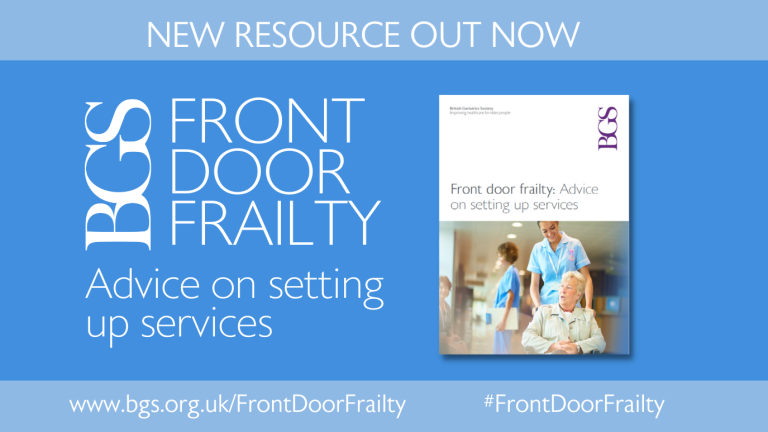
Older people living with moderate and severe frailty are the population group most likely to receive care in corridors and other non-clinical spaces and are more likely than other age groups to face long waits in emergency departments, resulting in serious harm. Estimates suggest that there were more than 16,000 excess deaths caused by long stays before admission in 2024. By putting clinicians with expertise in frailty at the front doors of hospitals, older people can be identified as soon as they arrive, assessed and, where appropriate, diverted to alternative services in the community. This improves patient experience for older people and will help the NHS to prevent excess deaths in emergency departments.
You can’t do any of this without the staff.
The health and social care sector is nothing without the people who work in it. The last NHS Workforce Plan was published in 2023 and nothing has happened to implement the commitments within it. A consultation on the latest plan closed more than six months ago and the plan is yet to be published. We know that there are not enough experts in older people’s healthcare. We would urge the Prime Minister to ensure the UK plans for the ageing population by building a multiprofessional workforce with the right skills to meet the needs of older people. We would also suggest that frailty training should be mandatory for all health and social care professionals as most of them are likely to care for older people more than any other population group.
Work with us.