Megan Harrison is the Communications and Marketing Co-Ordinator at the BGS. She was diagnosed with Crohn’s Disease, a form of Inflammatory Bowel Disease (IBD), in 2019. Dr Isabel Carbery is a post CCT IBD research fellow at St Mark’s Hospital, London. As part of her training, she spent three years in research focusing on older people with IBD. Dr Oliver Todd is a clinical associate professor in geriatric medicine at the University of Leeds and a consultant geriatrician at Bradford Teaching Hospitals NHS Foundation Trust.
I was diagnosed with Crohn’s Disease in 2019 at the age of 20, not an unusual age for IBD to appear. Although IBD can develop at any age, most diagnoses occur between 15 and 40 years old. Like many others (approximately 1 in 123 people in the UK), I quickly became fluent in a new language — flares, remission, steroids, biologics, strictures, fatigue…the list goes on.
Luckily, it wasn’t long before I found a community of people going through similar experiences. The voices I saw across charities, social media and patient networks reflected my own as a young adult and this helped me to adapt to life with IBD.
When I joined the BGS in 2024 and began learning more about older people’s healthcare, I realised I hadn’t seen much information about IBD and older people.
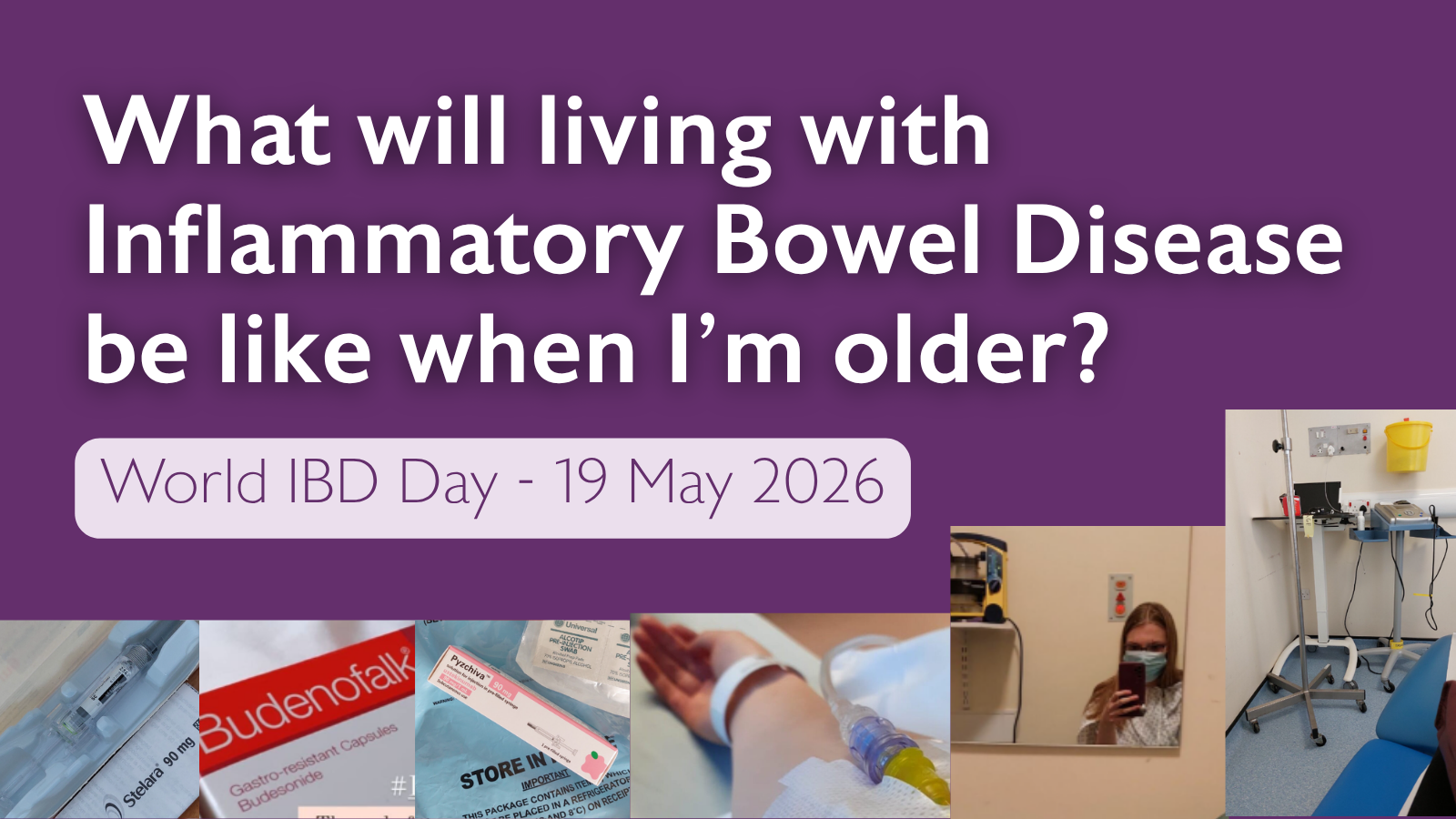
This led me to ask myself: “What will living with IBD be like when I’m older?”
Thankfully, Dr Isabel Carbery and Dr Oliver Todd were on hand to advise, having previously worked together on a research paper, Considerations on Multimorbidity and Frailty in Inflammatory Bowel Diseases.
IBD isn’t only a young person’s disease
IBD is a chronic condition. It is not something which only affects younger people. With advances in healthcare, many of us are living longer, which also means living longer with IBD. Late-onset IBD is also not uncommon, with approximately 15% of IBD cases diagnosed in those aged over 60. For gastroenterologists like Isabel, this means that up to a third of her patients with IBD are older people.
Older people with IBD – who is responsible for their care?
Older people with IBD are typically cared for by the gastroenterology department for their IBD, both in outpatient and inpatient settings. Advice or review from other speciality colleagues e.g. cardiologists is sought when needed, with general practitioners providing the patient’s holistic care in the outpatient setting. At present, geriatricians are referred to less commonly, and perhaps only when an older person with IBD has particularly complex needs. This is likely to vary between regions and hospitals.
In outpatient care, an older person may see a gastroenterologist with a special interest in IBD, but not necessarily in older people’s healthcare. Isabel identifies that this is an important area and is keen to focus on upskilling gastroenterologists as a more practical way to improve care for older people with IBD. Additionally, having other team members with an interest in older people’s care such as the IBD specialist nurses advocating for older patients could make a difference.
Oliver has also recognised the importance of including specialists in older people’s healthcare in his team’s work with older adults living with heart failure, where having a geriatrician in the cardiology multidisciplinary team (MDT) has been helpful.
Polypharmacy and multimorbidity
As people grow older, multiple health conditions can co-exist, which can also lead to multiple medications being needed. When deciding on IBD treatment for an older person, these complexities should be considered.
As Isabel highlighted, treatment decisions depend on the individual. She is currently working with colleagues from around the country to develop strategies to improve care for older people with IBD.
With a shift towards individualised care, rather than prescribing based on age alone, clinicians are encouraged to weigh the overall risks and benefits for each person. In addition to risks from specific drugs themselves, such as infections or cardiovascular risks, there are also practical considerations which are particularly important for older people, such as whether they are able to swallow large tablets or whether the injection devices or suppositories are useable with arthritis for example. There are various factors that go into decision making about medications.
Continence
Continence is a sensitive but incredibly important topic.
Oliver has found that continence is often an issue for older patients. It can have a major impact on a person’s overall health, but it is an area which a patient is seldom asked about in routine clinical care.
Isabel likewise agrees that continence is not raised enough in gastroenterology, despite being a common symptom in patients old and young. It is important that continence is addressed as it cannot be treated if unidentified.
Age-related changes or other conditions may also play a role in continence. When someone has a chronic disease such as IBD, it is also important to avoid assuming everything is related to their condition. Every person and their unique situation must be assessed carefully.
Surgery in older age
Surgery remains an important treatment option for IBD in specific situations for older people. Decisions regarding surgery will depend on the individual and should involve MDT members to ensure all appropriate treatment options are considered and to review whether the person is deemed fit enough for surgery and safe enough from an anaesthetic perspective.
Surgery requires careful planning. A person’s health and nutrition should be optimised beforehand and through recovery where possible. Factors such as frailty, comorbidities and recovery time also need to be considered, ideally in liaison with Perioperative Care for Older People undergoing Surgery (POPS) services.
Changes in cognitive health
I’ve often wondered how IBD care is affected if an older person experiences a decline in brain health, such as dementia or delirium.
For Isabel, one of the challenges can be obtaining a full picture of symptoms. How easy it is to obtain investigations such as bloods, stool samples and scans will vary depending on the severity of a person’s cognitive symptoms. A next of kin can be hugely valuable in understanding the broader impact on daily life and can help with person-centred decision making around investigations and treatment.
If someone has advanced dementia with a shorter life expectancy, that will affect clinical decisions compared to someone who is younger and fitter.
Looking ahead
Like any medical condition, living with and treating IBD in later life shouldn’t just be about IBD itself. It is important to look at how it will intersect with everything else that comes with ageing.
From speaking to Isabel and Oliver, I took comfort from the fact that awareness is growing, even if there is still work to be done. As Isabel highlighted from her research, which involved speaking to older people in focus groups as part of her patient and public involvement and engagement (PPIE) work, older people are keen to get involved and share their experiences. Sadly, they are not always provided this opportunity.
We need to ensure that older people with IBD are seen, heard and supported just as much as the younger population.
IBD doesn’t end with age, nor should the conversation around it.