What is Comprehensive Geriatric Assessment (CGA)?
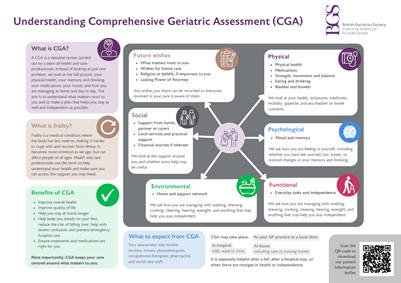
A CGA is a detailed review carried out by a team of health and care professionals. Instead of looking at just one problem, we look at the full picture - your physical health, your memory and thinking, your medications, your mood, and how you are managing at home and in your day to day life.
The aim is to understand what matters most to you and to make a plan that helps you stay well and independent for as long as possible.
Why am I having a CGA?
You may be offered a CGA as part of a routine appointment, or because there has been a change in your health or independence. It is especially helpful after a fall, hospital stay, or when you have multiple different health conditions.
A CGA helps you stay as independent as possible. It aims to reduce the impact frailty has on your daily life, and where possible, slow it down.
Research shows that CGA can:
- Improve overall health.
- Improve quality of life.
- Help you stay at home longer.
It can help keep you more steady on your feet, reducing the risk of falling over. It may help with severe confusion, and prevent you needing emergency hospital care in future. It will also help to make sure that treatments and medications are right for you.
Most importantly, CGA ensures that your care is centred around what matters to you.
What is frailty?
The term frailty is used to describe a medical condition where the body loses its in-built reserves, making it harder to cope with and recover from illness. It becomes more common as we age, but can affect people of all ages.
Older people can worry about having this label. However, health and care professionals use it to make sure they have a good understanding of your health so that you are able to access all of the support you might need.
What happens during a CGA?
The assessment is usually carried out by a team, which may include doctors, nurses, physiotherapists, occupational therapists, pharmacists, and social care staff. It can take place in different places:
- In hospital - at A&E, in a ward or at a clinic.
- At your GP practice or a local clinic.
- At home, including a care or nursing home.
What does CGA involve?
Physical health
We will look at your past and current health problems and talk through anything new that is worrying you. This includes your skin, pain, tiredness, or anything else affecting how you feel day to day. We may do further tests depending on your needs.
Medications
We will review all of your medications, including anything you buy over the counter or take as supplements. If we think any changes would help, we will discuss these with you first. This may include adjusting doses or stopping medications that are no longer helping.
Home and support network
We will talk about your home and living situation, who supports you, and any financial worries you may have. We may suggest local services that could help, such as meal deliveries or carers. We can also help your family, partner or carers find support if they need it.
Strength, movement and balance
We will look at how you move around and your balance, and check if you are at risk of falling over. We may also look at your strength and whether any walking aids could help you. If needed, we may suggest exercises or refer you to a physiotherapist.
Everyday tasks and independence
We will ask about how you manage everyday tasks such as washing, dressing, cooking, and cleaning. We will also ask about your hearing and eyesight. If we think extra support or equipment could help you stay independent, we will let you know.
Mood and memory
We will ask about how you are feeling in yourself, including your mood and whether you have felt worried, low, or lonely. To help us understand you better, we will also ask about your hobbies, interests, and work. We may also check your memory and thinking. If needed, we will make sure you get the right support.
Eating and drinking
We will ask about your appetite, what you enjoy eating, and whether you have noticed any changes in your weight. We will also ask about any difficulties with swallowing or chewing, and check your teeth and mouth if needed. Eating and drinking well is an important part of staying healthy, and we will make sure you have the correct support in place.
Bladder and bowels
We will ask about your bladder and bowel habits. This includes any problems with leaking urine, needing to go urgently, or difficulty opening your bowels. We will also ask about constipation, as this is common and can affect how you feel day to day. If needed, we will suggest ways to help.
Future wishes
We will ask about what matters most to you and what your wishes are for your care in the future. This includes talking about your preferences towards the end of life, if you feel ready to do that. We may also ask about your religion or beliefs, as these can be important when planning your care. We will also ask whether you have a Lasting Power of Attorney in place. Any wishes you share will be recorded so that everyone involved in your care is aware of them.
What happens next?
After your assessment, your team will talk you through the next steps and what to expect. If you have any questions at any point, please do not hesitate to ask.
