Summary
Hover me to read more

NHS Ten Year Health Plan: How it affects you

Published date
Last updated

From neighbourhood health, to prevention, to digital technology, Fit for the Future: 10 Year Health Plan for England is a 177-page document setting out the direction of travel of the NHS for the next decade. Here we pull out the key points, explain the impact they may have on older people's care, and suggest some questions for BGS members to ask local decision-makers.

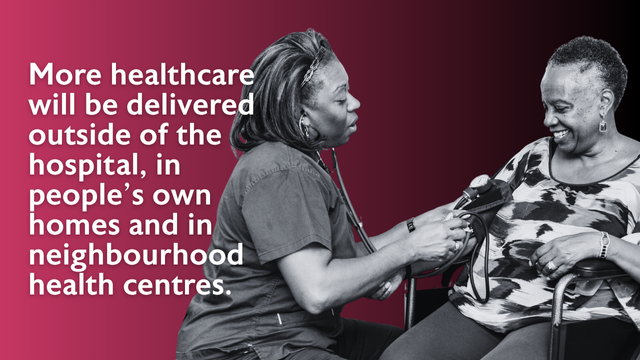
1. More healthcare will be delivered outside of the hospital, in people’s own homes and in neighbourhood health centres.

The Ten Year Health Plan commits to moving healthcare out of hospitals and into the community, with a big focus on neighbourhood health.

Neighbourhoods will serve a population of around 50,000 people and will aim to provide care in or close to people’s homes. Neighbourhood health centres will be staffed by healthcare professionals from across the multiprofessional team including specialists, GPs, social workers, nurses and allied health professionals. Among the initiatives to be introduced as part of neighbourhood health are ‘call before convey’ services to reduce avoidable admissions from care homes and more community-based end of life care. 

What impact will this have on older people’s care? 

While hospital care is and will always be an essential part of healthcare for older people, there are times when it causes more harm than good. Long stays often lead to deconditioning and hospital-acquired infections, and are detrimental to older people’s wellbeing. If delivered properly, the shift to neighbourhood health could result in more older people receiving the care that they need closer to home, helping them to live independently for longer and providing a good alternative to hospital admission. 

Questions to ask about this:
  • How is this different to the various community-based integrated services already in operation across the country?

  • How will systems across the country be supported to make this change?

  • How will neighbourhood health provide better support to people living in the community with multiple long-term conditions, including frailty and dementia? 

Embedded PDF

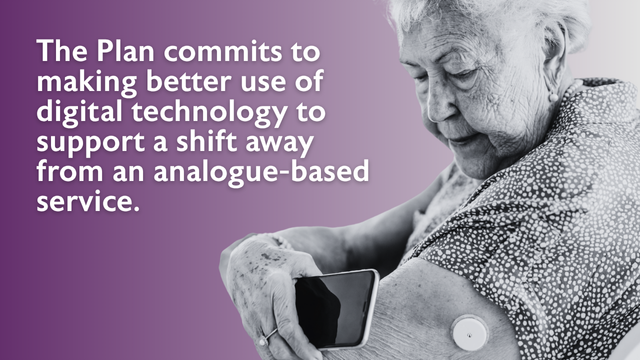
2. The Plan commits to making better use of digital technology to support a shift away from an analogue-based service.

The Ten Year Health Plan states that the NHS will be transformed from a largely analogue service to being a leader in the use of technology to support both patients and staff. 

The NHS App is a key part of this with the intention of giving patients more control over their appointments and prescriptions. The Single Patient Record is intended to bring all of an individual’s medical records together in one place and to make records available to the patient. The Plan sets out plans to use AI to support clinicians and to automate administrative tasks. 

What impact will this have on older people’s care? 

BGS members often report frustrations with IT systems within the NHS, including not having access to patient records, slow computers and unreliable WiFi. Addressing these issues will lessen the administrative burden for staff. Using AI for administrative tasks may also free up clinician time, although many of the claimed benefits of AI are yet to be proven.  

If the plan to digitise the NHS works, it should improve access for patients. While many older people are confident using computers and smartphones, digital exclusion increases with age. Age UK have found that 29% of people aged over 75 in the UK do not use the internet.i Older people who struggle to use digital technology must be supported to do so or be able to access care in a format that they prefer (ie, appointment letters through the post) without any delay to care. 

Questions to ask about this:
  • How will older people and others who might be less able to use technology be supported through this change?

  • Many NHS staff are frustrated with substandard systems and hardware – multiple sign-on processes for different devices, old computers that take a long time to start and inadequate WiFi in NHS buildings. How will these concerns be addressed?

  • How can remote monitoring, wearables and other technological devices help with delivering care for older people safely? 

1. https://www.ageuk.org.uk/siteassets/documents/reports-and-publications/…

Embedded PDF

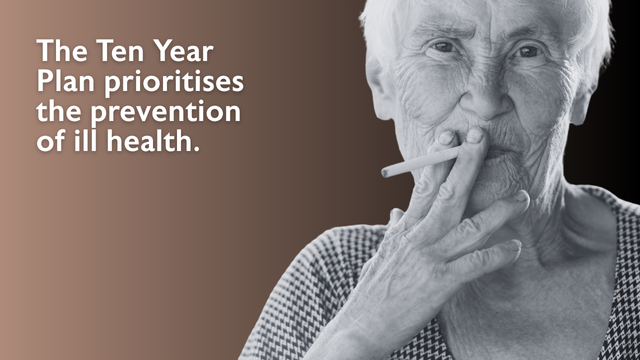
3. The Ten Year Plan prioritises the prevention of ill health.

The Plan commits to transforming the NHS from ‘a sickness service to a prevention service’ with specific aims to reduce childhood obesity, creating the first smoke-free generation and helping children and families to make healthy choices. 

There are also commitments to supporting people to make healthy choices on alcohol, improving air quality and encouraging people to move more through a national exercise campaign. 

What impact will this have on older people’s care? 

These aims of course will, in time, ensure that those who are young now will live healthier lives into older age. However, the chapter does not acknowledge the importance of preventing ill health in older people. Older people use the NHS more than any other age group and therefore, if the ambition of transforming the NHS from a ‘sickness service to a prevention service’ is to be achieved, older people must be included in prevention plans. 

Questions to ask about this:
  • How will the national campaign to encourage physical activity be tailored to the needs of older people?

  • What specific initiatives will support people to age well and remain healthy and independent into older age? 


Embedded PDF

4. The Plan sets out ambitions for the NHS to be a better employer.

While the Ten Year Plan will be followed by an updated NHS Workforce Plan later this year, the Plan did set out some commitments regarding workforce. 

This included creating 1,000 new specialty training posts; developing advanced practice models for nurses and allied health professionals; and setting standards to improve working conditions in the NHS. Staff standards will include access to food and drink at work; protection from violence, racism and sexual harassment at work; and flexible working options. 

What impact will this have on older people’s care? 

It is essential that workforce plans ensure that there are enough specialists in older people’s care and that healthcare professionals from all specialties have the skills to care for older people with frailty and other long-term conditions. The refreshed NHS Workforce Plan must set out how the bottleneck in medical training will be addressed and how the future workforce will meet the needs of the ageing population. 

Questions to ask about this:
  • When will the NHS Workforce Plan be published?

  • What opportunities will there be to contribute to the NHS Workforce Plan?

  • What modelling has taken place to ensure that the future workforce meets the needs of the future population?

  • How can the workforce be supported to shift from hospital to community without leaving the hospital short-staffed? 

Embedded PDF

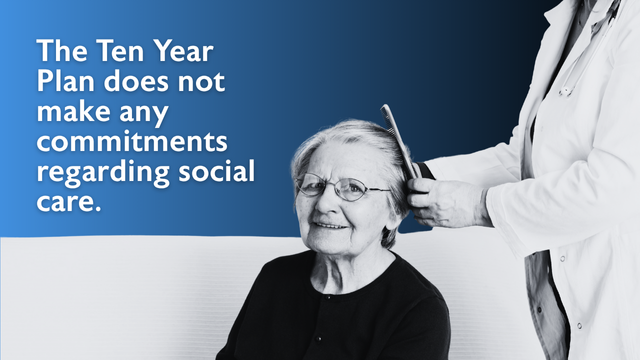
5. The Ten Year Plan does not make any commitments regarding social care.

While the Ten Year Plan acknowledges social care as a crucial aspect of neighbourhood health, reforms to the social care system are being left to the Casey Commission.  

What impact will this have on older people’s care? 

In order for the Ten Year Plan to be successful, social care reform must be accelerated to ensure that social care is able to support the shift to neighbourhood health and ensure that people are supported to remain well in the community and to facilitate timely discharge from hospital. Failure to reform social care at the same pace as implementation of the Ten Year Plan risks social care falling even further behind. 

Questions to ask about this:
  • Given the timelines of the Casey Commission, how will ICBs address the delays in delivering social care for older people who need it in the immediate term?

  • How are the neighbourhood health teams in our community involving social care colleagues? 

Embedded PDF