These 10 messages set out the current state of older people's healthcare in the UK. They are intended to help people understand why older people's services must be prioritised and to support BGS members when discussing older people's healthcare with leaders and decision-makers.
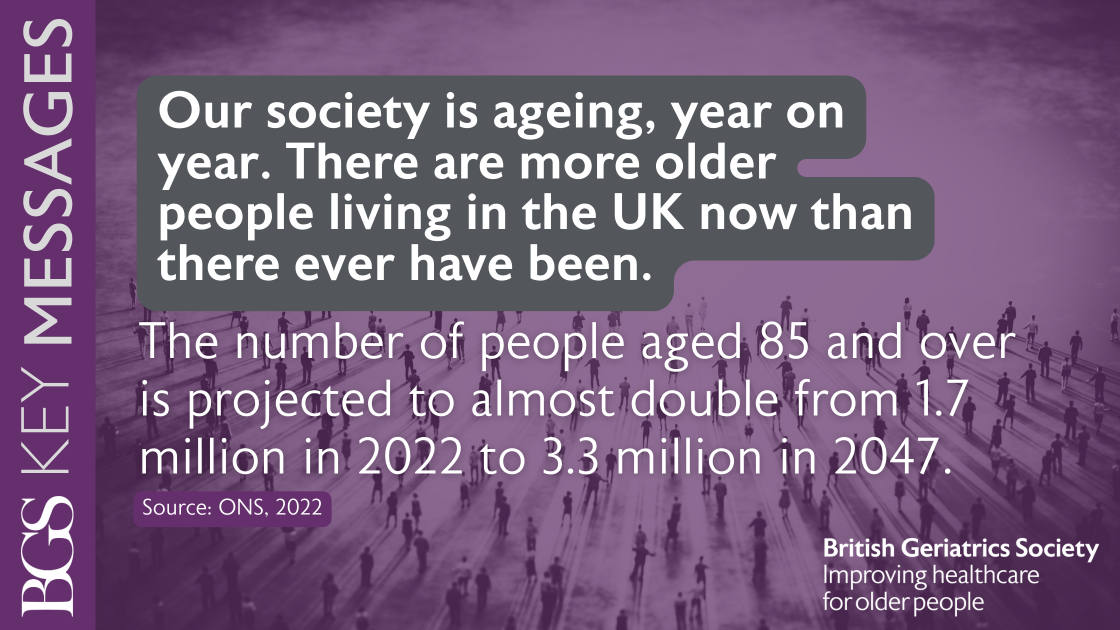
1. Our society is ageing, year on year. There are more older people living in the UK now than there ever have been.
The number of people of pensionable age is projected to rise from 12 million in mid-2022 to 13.7 million in mid-2032. The number of people aged 85 and over is projected to almost double from 1.7 million in 2022 to 3.3 million in 2047.1 Throughout the last 40 years, life expectancy in the UK has generally been increasing. However, healthy life expectancy is decreasing, meaning older people are spending more of their lives in poor health.2
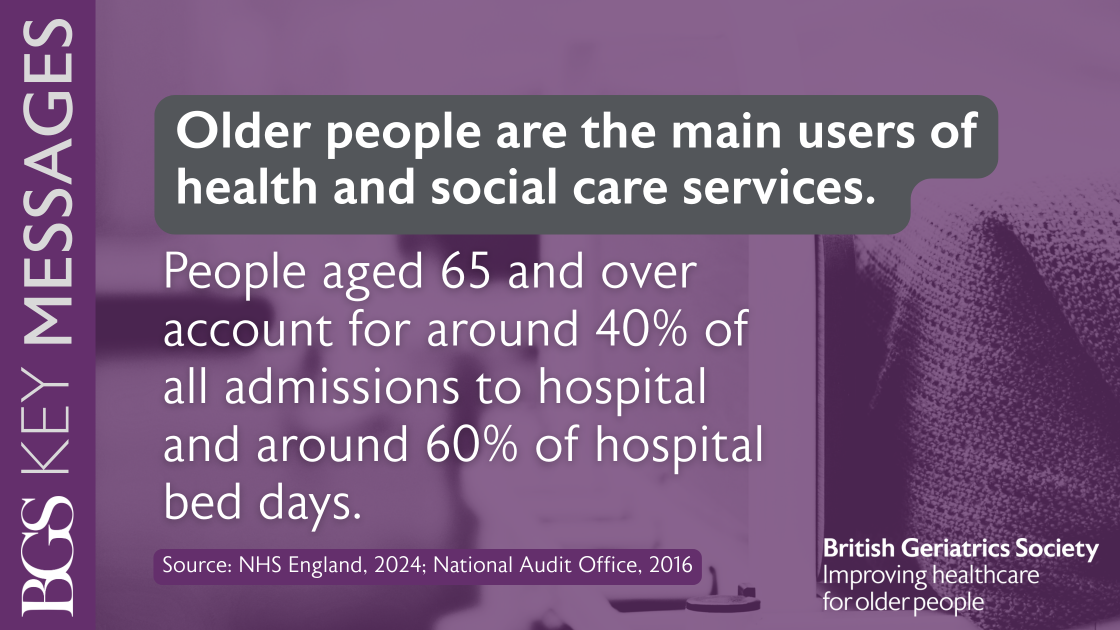
2. Older people are the main users of health and social care services.
People aged 65 and over account for around 40% of all admissions to hospital3 and around 60% of hospital bed days.4 People aged 74 and over consult with their GP almost four times as often as those aged between 5 and 14 and almost twice as often as those aged between 45 and 64.5 Despite being the people who rely most on health and care services, care and support for older people is often disjointed and hard to navigate.
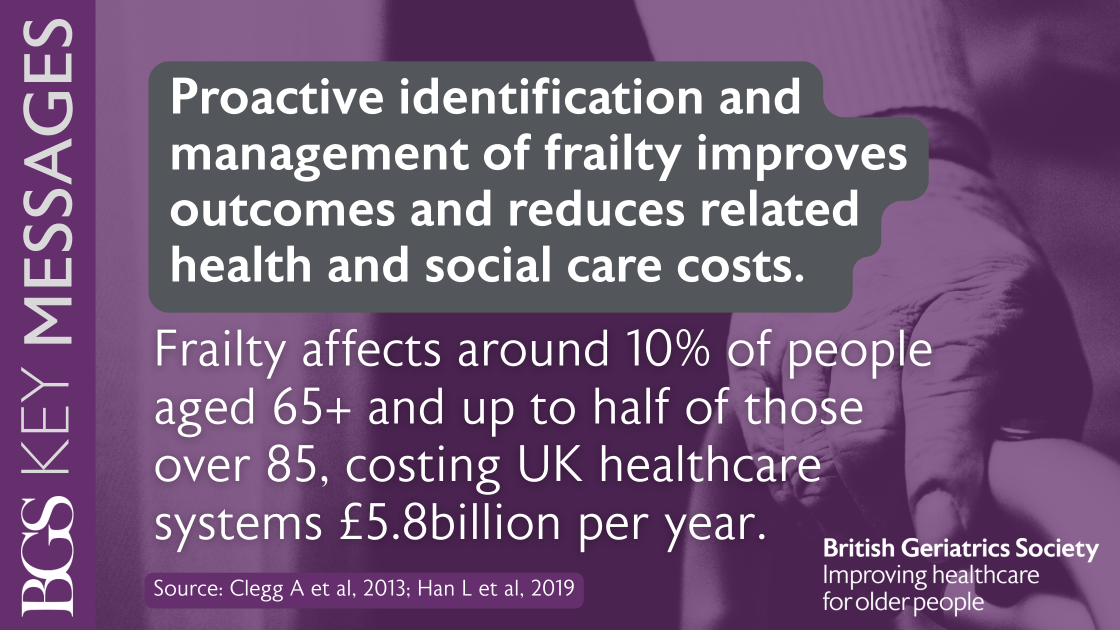
3. Proactive identification and management of frailty improves outcomes for patients and families, and reduces related health and social care costs.
Frailty affects around 10% of people aged 65 and over and up to half of those aged over 856 and costs UK healthcare systems £5.8 billion per year.7 Being active and sociable, eating well, and avoiding smoking and excessive alcohol consumption are all strategies that older people can take to ensure healthy ageing. By intervening early, it is possible for clinicians to identify frailty early and act to delay or prevent its onset or progression, improving wellbeing and resilience in older people, and reducing demand for health and social care services.
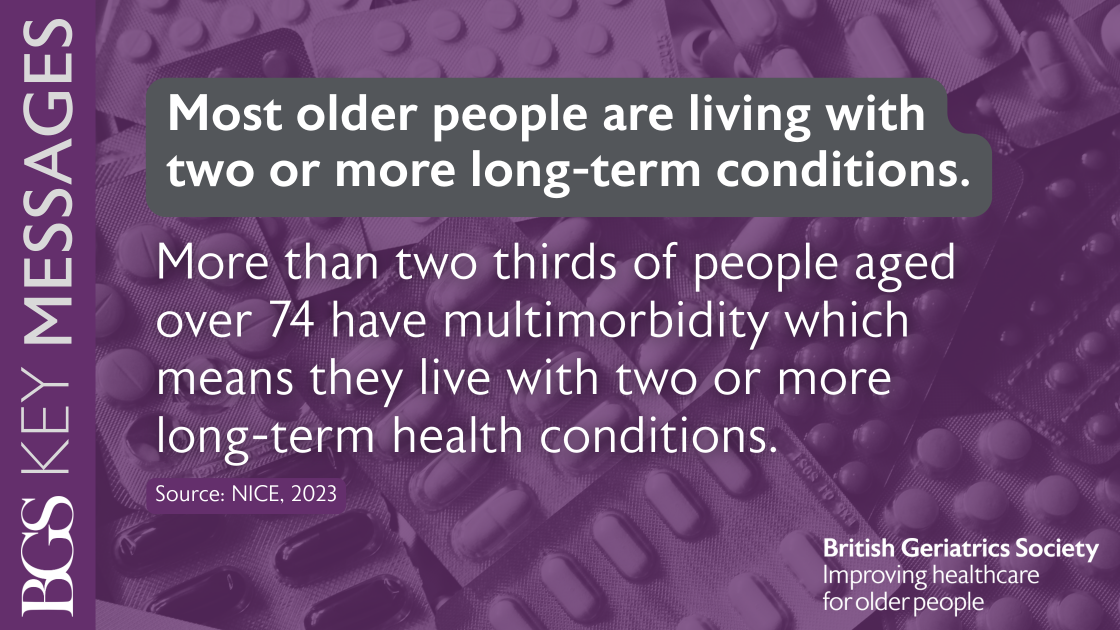
4. Most older people are living with two or more long-term conditions.
67% of people aged over 74 have multimorbidity which means they live with two or more long-term health conditions.8 By 2035, 17% of people aged 65 and over will have four or more conditions compared to 9.8% in 2015.9 982,000 people in the UK are estimated to be living with dementia and it is estimated the number will increase to 1.4 million by 2040.10 Most people with dementia will have multiple other health conditions so need holistic care and support that is well-coordinated.
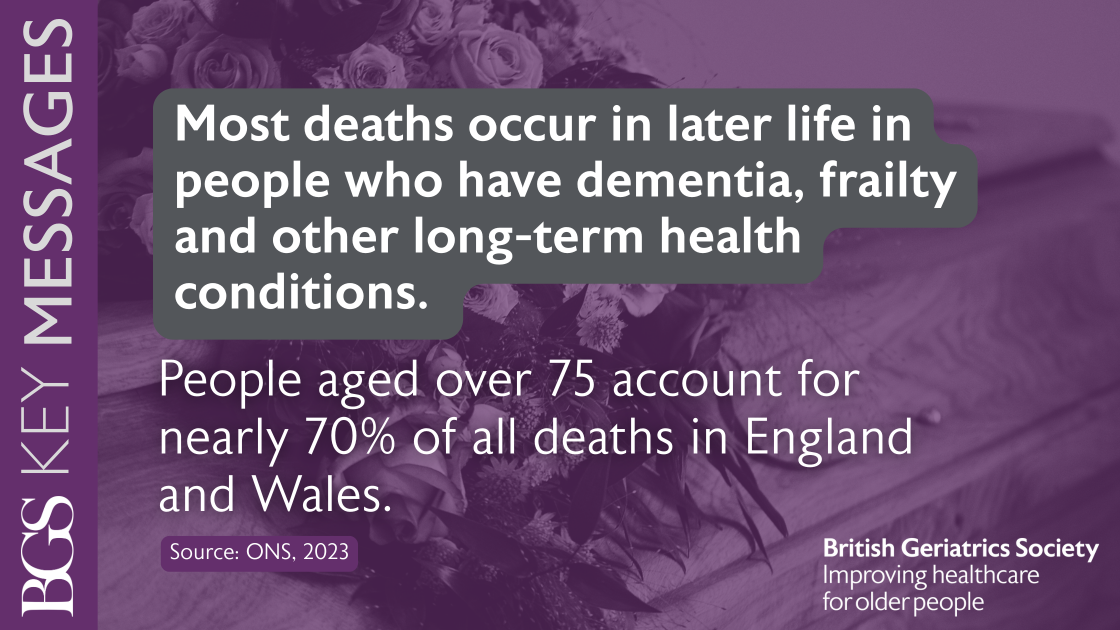
5. Most deaths occur in later life in people who have dementia, frailty and other long-term health conditions.
Most deaths occur in older age with people over 75 accounting for nearly 70% of all deaths in England and Wales.11 Dementia is the leading cause of death in England and Wales, accounting for around 12% of all deaths.12 Older people should be supported to participate in advance care planning, ensuring they have good end of life care, including support for their family carers, and a ‘good death’ in the place of their choosing.
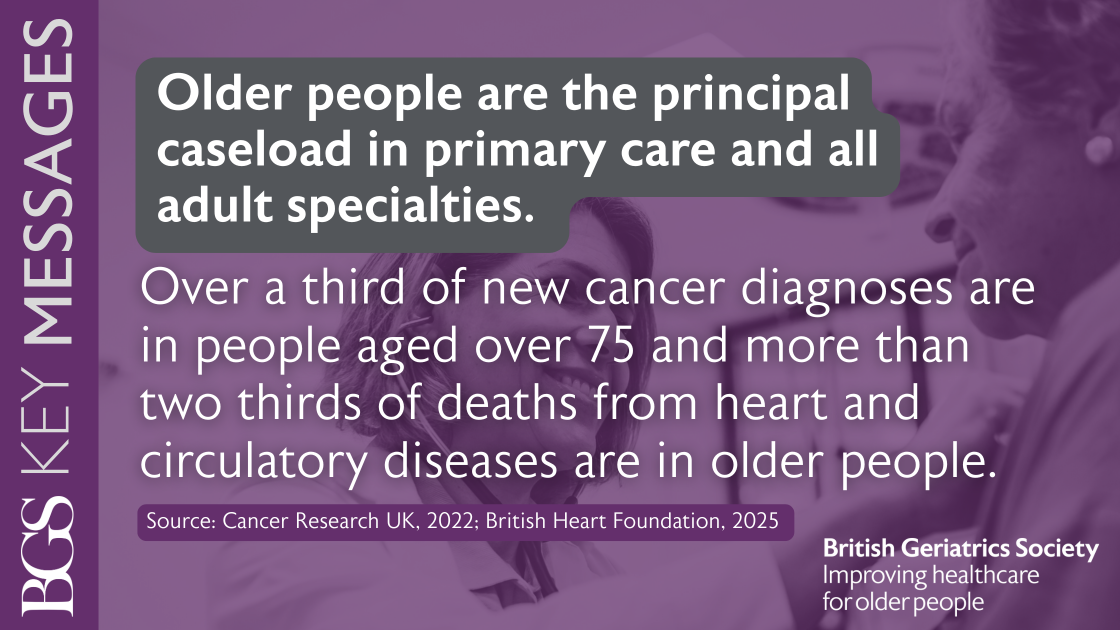
6. Older people are the principal caseload in primary care and all adult specialties.
Most people presenting with acute or chronic illnesses are older people who will generally be living with frailty, dementia, and/or other long-term conditions. Over a third of new cancer diagnoses are in people aged over 7513 and more than two thirds of deaths from heart and circulatory diseases are in older people.14 Healthcare professionals in all adult specialties need the right knowledge and skills to care for the complex needs of their older patients.
7. There are not enough specialist healthcare professionals to care for the ageing population.
In order to meet a ratio of one geriatrician to every 500 people aged 85 and over, 1,846 more geriatricians will be required by 2030,15 a target that is unlikely to be achieved. Government and health service leaders must do more to encourage and support healthcare professionals to specialise in older people’s care. In addition, to provide effective care for the ageing population, services will need to make better use of the entire multiprofessional team.16
8. Care at home and in the community benefits older people and their carers.
Older people want to remain independent at home for as long as possible.17 Delivery of comprehensive geriatric assessment (CGA)18 in the community can identify older people who can benefit from proactive care services, remote monitoring, reablement home support, community rehabilitation, virtual wards and carer respite. Integrated services such as these deliver more joined-up care for older people, leading to better outcomes and preventing or delaying the need for urgent hospital attendance or admission to a care home.
9. Hospitals are a vital part of care for older people but long stays are harmful.
Acute hospitals are an essential component of emergency and planned care for older people – those who can benefit from hospital admission should never be denied it. But long hospital stays can cause harm for older people through deconditioning, delirium and hospital-acquired infections. Unnecessary hospital admissions should be avoided and hospital stays kept as short as possible. Urgent community response and hospital at home services provide alternatives to urgent hospital admission.19 Front Door Frailty services can support older people with frailty to be identified, assessed and treated within a few hours of attending hospital, discharging them home on the same day if possible.20 When hospital admission is necessary, discharge planning from the point of admission can help to ensure that the person returns home as soon as they are clinically ready to be discharged.
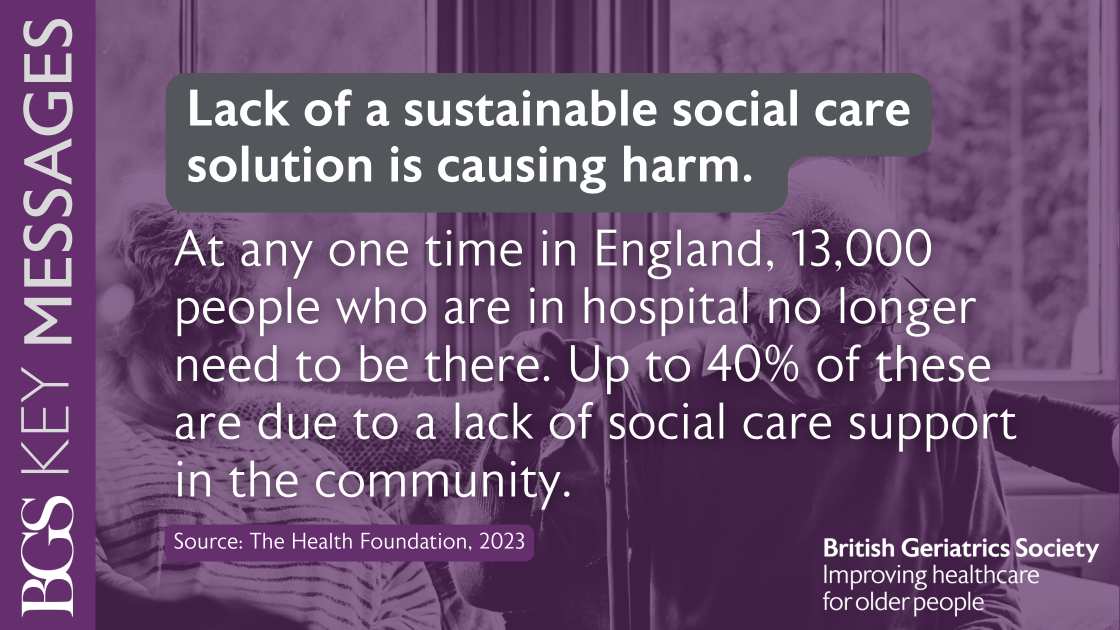
10. Lack of a sustainable social care solution is causing harm.
At any one time in England, 13,000 people who are in hospital no longer need to be there. Around 40% of these people are stuck in hospital due to a lack of social care support in the community21 at a cost of £901 per non-elective bed day.22 Lack of social care is costing the NHS in England £4.5million per day or £1.7billion per year in delayed discharges.
The social care system is in crisis, with successive Governments promising reform and failing to deliver. A well-functioning social care system would enable people to live well in their own homes or in care homes with the right support and reduce the need for extended stays in hospital. The Government must recognise the interdependency between social care capacity and improving flow through acute hospitals and take urgent action to invest in and reform social care.