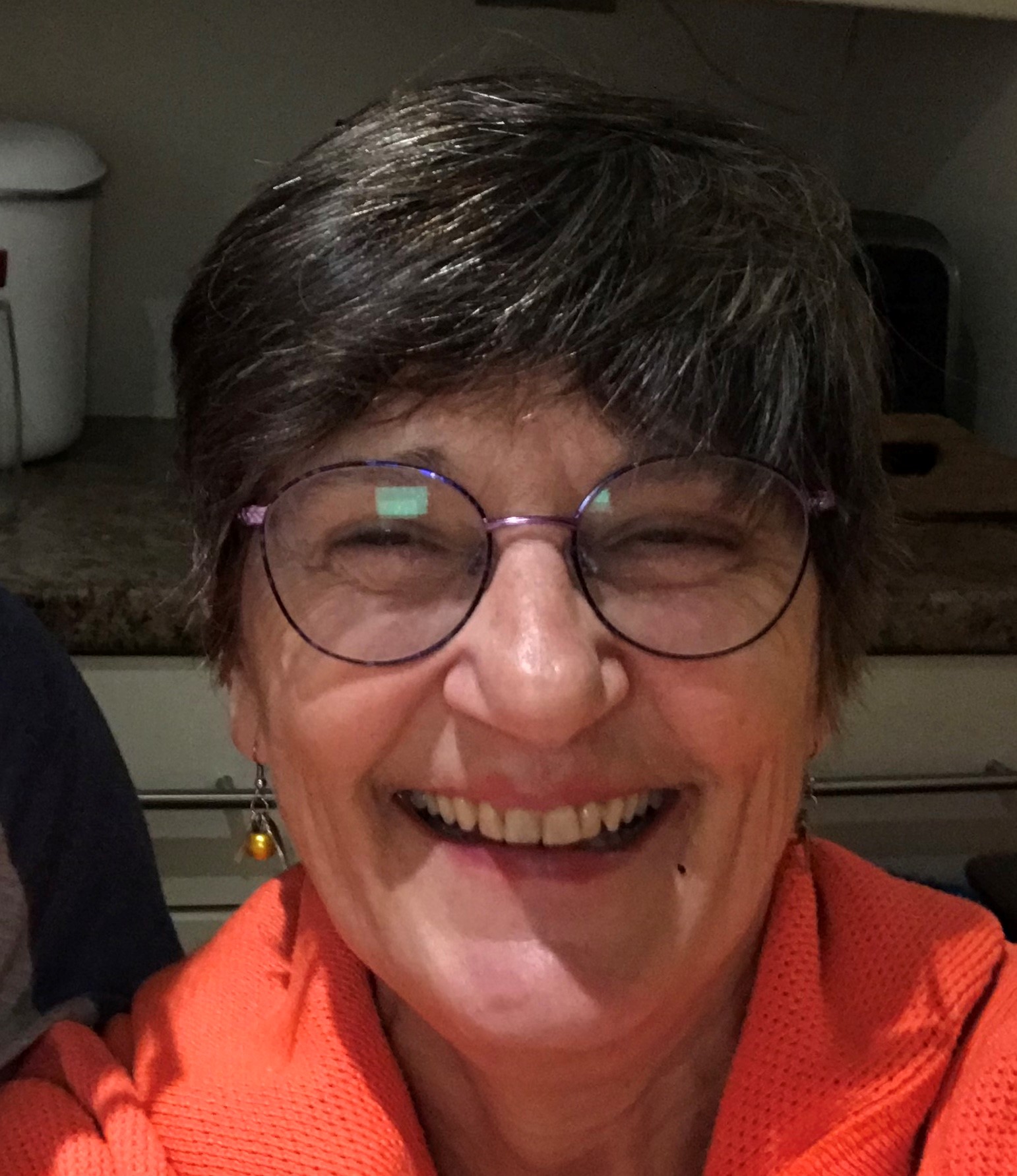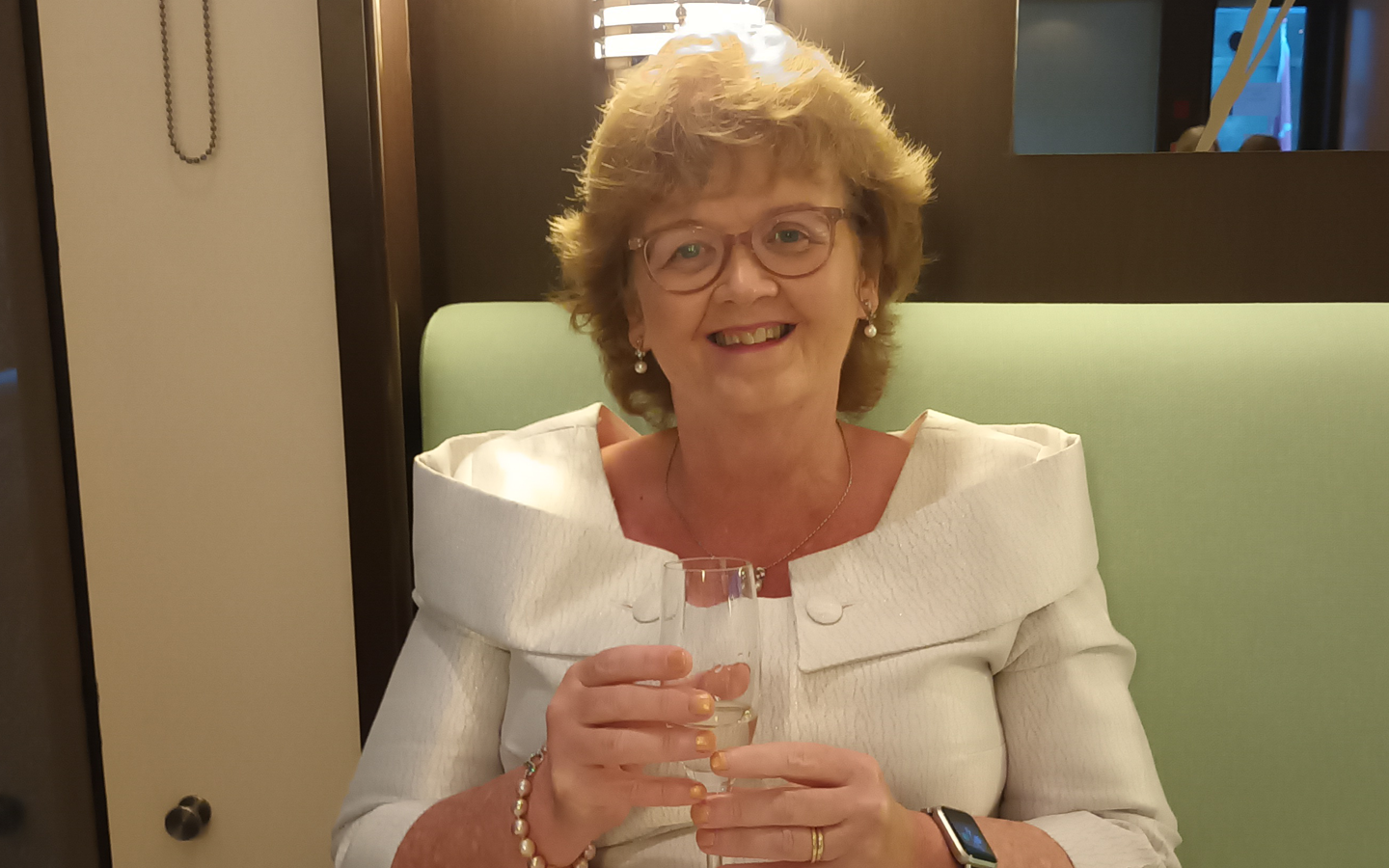
We are thrilled to announce that Dr Rosemary Kelly has won our prestigious Marjory Warren Lifetime Achievement Award for 2025.
Named in honour of the founder of modern geriatric medicine, Dr Marjory Warren, the award is presented annually to someone who has made an outstanding contribution to the healthcare of older people.
Rosemary spent 20 years as a consultant geriatrician near Belfast at Lagan Valley Hospital, Lisburn, Northern Ireland, and is now at Ulster Hospital in Dundonald, Northern Ireland. She established and delivered multiple frailty services, an intermediate care service, and an osteoporosis service. She has held many leadership roles, including Co-chair of the Northern Ireland Frailty Network 2017-2018 and Chair of BGS Northern Ireland 2011-2014.
We talked to Rosemary about her career, winning the Marjory Warren Lifetime Achievement Award, and her hopes for the future.
What inspired you to choose geriatrics as your specialty, and what inspires you to continue working in geriatrics?
One of my first jobs was as a senior house officer, which would now be called a resident doctor, in A&E. I found myself wanting to treat the older people, and I grew to love the interactions I had with them.
My next job was in the care of older people, in the James Connolly Memorial Hospital in Dublin. While there I worked alongside two inspirational geriatricians, Dr Jacques Noel and Dr John Lavan. From that point on, I knew caring for older people was for me, and I have never doubted it since.
I enjoy the holistic approach to care and working with multidisciplinary teams. Working in this area has allowed me to innovate and develop services, and the change and evolution of the specialty keeps me inspired. All careers in medicine are lifelong learning after all!
I love the work, and I love working with older people; it’s a privilege to see them through their care journeys. I would hope that I have treated every patient with respect and as a valued member of society.
Tell us about your history with the BGS and working with frailty.
I went to university in Dublin, and I later went to Manchester and trained under Professor Ray Tallis. After that, I came to Northern Ireland, where I was born but had never worked. The BGS became a lifeline for me midway through my registrar training. It really helped me cope with all the changes working in Northern Ireland brought, and I became very passionate about the BGS. In time, I became chair of BGS Northern Ireland.
As part of that role, I sat on the BGS board. The insight I gained from being on the Board allowed me to recognise that frailty would be the next big development in older people’s care. I subsequently set up an acute frailty unit in my hospital in Lagan Valley based on the information gained from my involvement with the BGS.
Currently, at the Ulster Hospital, Dundonald, I am part of a small team aiming to develop a sustainable service whereby older people who have been assessed for admission can benefit from early CGA and hopefully have their length of stay reduced.
I still love to innovate and set up new services, and hope to continue to do so.
You’ve done a lot to support resident doctors and medical students. Do you have any particularly rewarding stories from that work? Perhaps there’s someone whom you have inspired to choose geriatrics.
Lagan Valley Hospital is a small district hospital, and each consultant had a role in addition to their clinical work. Mine was education. At one point, I was the Foundation Programme Director, an educational supervisor, and a clinical supervisor. Which meant I was mentoring 16 doctors through each rotation, all at the same time. This might seem daunting, but I loved seeing all the new doctors and watching them settle in. I hope my support helped get them through difficult patches.
An example familiar to the BGS of an exceptional trainee I mentored was Dr. William McKeown, who recently set up a frailty elearning course for the BGS.
I helped him get involved in the Northern Ireland Medical and Dental Training Agency, and together we set up and delivered the frailty module, where all Foundation 2 doctors in Northern Ireland receive training on Frailty. William is now a consultant in the care of older people, and I know he will go far.
I find it a great joy watching new doctors progress, and if there is ever a hint that they might have an interest in working with older people, I always try and mentor them in that direction.
Have there been any challenges you have faced which have been specific to the care of older people in Northern Ireland?
Most of the problems in Northern Ireland are very similar to those faced in other regions. The prevalence of frailty in people over 50 here is almost double that in the Republic of Ireland, so there are certainly issues in Northern Ireland that need addressing. Attitudes towards older people have not improved enough; we know CGA works, but not everyone who needs it is receiving it. Like other nations, we have long trolley and ambulance waits for our older people with frailty, which, as a geriatrician, is heartbreaking to see and hear about so often in the media.
How did you feel/react when you found out you had not only been nominated for this award, but had won it?
There were no words. I was delighted, shocked, humbled and full of emotion.
It was particularly moving when I reflected on my medical career. I am from a non-medical family and the eldest of 5 children. My father died when we were very young, the youngest child was two, and I was 16, so finances were limited, very limited. I was only able to become a doctor due to full grants being available from the government at that time. Someone from my social background today and looking to study medicine, would probably not be able to due to the expenses involved.
I will be forever grateful for the grant system at that time. To come from my background to win the Marjory Warren Lifetime Achievement Award is certainly some journey and one for which I am very proud.
As a geriatrician, however, it is not all about me. My whole career I’ve worked with teams- doctors, nurses, social workers, physiotherapists, occupational therapists and many others. Without them, I would never have won this award.
I would particularly like to thank two huge influences in my career, the late Sr June Cairns and my friend and colleague Dr Lynne Armstrong.
June was the Sister on Ward 14 in Lagan Valley Hospital and had an equal passion and love for older people. Together, we set up the Frailty Services at the Hospital. I would not have been able to achieve this award without her. How she would have loved hearing about all of this, she would have been so proud. June is missed every day. May she rest in peace.
And Lynne. Firstly, Lynne has been my rock, the ear to listen, the shoulder to cry on from when we trained together. I met Lynne when I returned to Northern Ireland as a registrar. We later became consultant colleagues in Lagan Valley Hospital. Lynne has recently joined me in the Ulster Hospital to help set up Frailty at the Front Door Services. It’s wonderful that we have come back together to make one last change before I retire.
Of course, I could not have done any of this without the support of my husband Alan and children Peter and Emma. They endured the frequent weekends on call, the meetings, and everything else. It cannot all have been too traumatic, though – both children have gone on to do medicine, and Alan and I have just celebrated 35 years of marriage!
And now in the later stages of my career, my life is further enriched. I have a beautiful daughter in law, and two precious grandchildren. My work-life balance is excellent.
What are you looking forward to in both your career and the speciality more generally?
Though I may be at the latter end of my career, I am enjoying being able to focus more on strategic development, improving frailty at the front door services, and working with new teams and stakeholders, including our quality improvement team. I would also like to continue to support and mentor new doctors for as long as I can.
The introduction of realistic medicine is a current topic being talked about in Northern Ireland, following on from the lead taken by NHS Scotland. We won’t be able to address all the problems faced by people with frailty without such a people-centred approach; the current system is far too reactive, and most of our doctors practice defensive medicine. Our older people with frailty need to be treated realistically, with their wishes discussed routinely and respected. I hope this is something I’m able to be involved in locally and regionally, if possible.
In the long term, I hope that attitudes to older people will change and that the specialty will be respected. Older people need to be treated with dignity, and I hope I can continue to influence that.
I have had the most amazing and fulfilling career, and it has just got better with this award. Thank you, BGS.
Our warmest congratulations, Dr Rosemary Kelly. We can’t wait to present you with your award at our Autumn Meeting.