Dr Carly Welch is a Consultant Geriatrician, has a PhD in acute sarcopenia and is Co-founder of the Geriatric Medicine Research Collaborative (GeMRC). She tweets @CarlyWelch_42
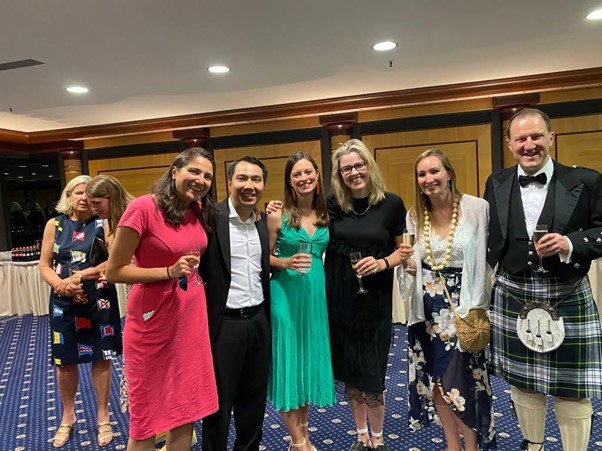
On Saturday, I returned from my third week at the European Academy for Medicine of Ageing (EAMA). This week had been held in Nice, France. Whilst I won’t deny that being able to stroll on the beach between sessions (and dip in the ocean for those who were brave) made a *nice* change from the streets of London or Birmingham, it really was the company I spent it with that made my experience unforgettable. I was fortunate to have been awarded a grant from the British Geriatrics Society (BGS) to attend this course, and I was thrilled when I heard that the BGS had recently agreed to not only continue to fund places, but to increase funding further. The course runs over two years and is divided into four one-week blocks. Here are some of my reflections of what I have learned/gained from the experience so far:
Week 1 – Ghent, Belgium
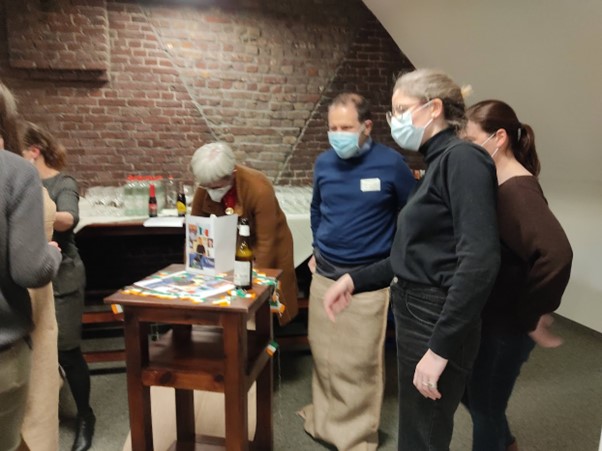
Our first session was focused on “Principles of Geriatric Care”, which obviously sounds like quite a broad title, and I can confirm that the learning we achieved from this first week was certainly broad! I remember when Mary and I first arrived, and we awkwardly scouted the room for people to have lunch with. Our start date had been delayed due to a rather interminable virus, and during this first week we were still wearing masks (in fact Mary and I had to arrive early to isolate for 24 hours as the UK was considered high risk at the time). Anyway, it wasn’t too long before we were sipping Belgian beer underneath the masks and bonding with our European colleagues over a game of “Zaklopen” (an old Dutch game that involves jumping in bags).
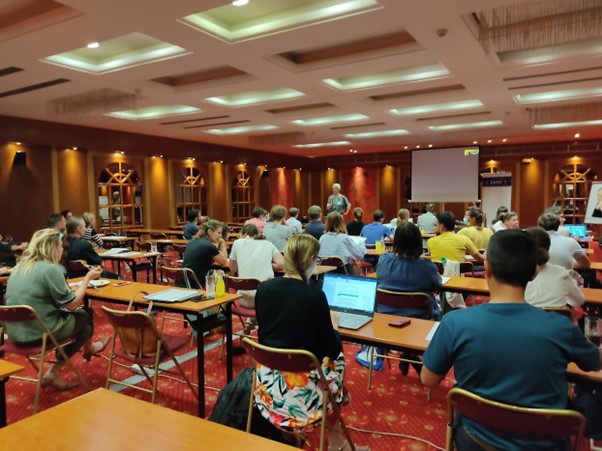
This week had the most traditional lecture-style teaching, with talks delivered to us from eminent global professors in the epidemiology and biology of ageing, as well as geriatric medicine care models. However, we also had a fair amount of interaction, which led to spontaneous role play by the end of the week. Some of the best learning from this first week occurred spontaneously, as we felt comfortable to discuss openly and share in both our similarities and differences across countries and cultures. We were able to discuss with sensitivity topics that can be quite emotive, over coffee (or margaritas), such as differing laws around assisted dying and involuntary medical treatment.