The Certificate in Geriatric Medicine (CGM), awarded by the Royal College of Physicians (RCP), is an examination developed collaboratively by the RCP and the British Geriatrics Society. It is designed for individuals who want to demonstrate their knowledge of topics that relate to the healthcare of older people. On successful completion of the CGM, candidates are eligible to progress to the Diploma in Geriatric Medicine (DGM).
What is the CGM?
The CGM is a credential that recognises the in-depth critical knowledge and skills required in the field of geriatric medicine to provide expert care for older people. Candidates sit four knowledge-based assessment (KBA) papers, each lasting 90 minutes and consisting of 50 multiple-choice questions (200 questions in total). Topics covered include frailty, management of multiple long-term conditions, comprehensive geriatric assessment, communication and community geriatric medicine. The full curriculum can be downloaded from the RCP CGM page.
Is the CGM right for me?
If you're a member of the multidisciplinary team involved in the provision of care of older people and want to demonstrate your knowledge and understanding of frailty and the chronic conditions experienced by older people, the CGM offers widely-recognised certification, developed jointly by two well-known and highly respected professional bodies, the RCP and BGS. The CGM is particularly suitable for overseas candidates, as all assessments are sat remotely.
The CGM is suitable for those working in community, primary or secondary care, with a minimum of two years’ post-qualification experience, at least four months of which will be in a setting where you have interacted with a large number of older people. You’ll be familiar with developing care plans for older people. Check out the full candidate eligibility criteria and other information on the RCP website.
Past candidates have included Advanced Clinical Practitioners, Nurses, Allied Health Professionals, SAS Grade doctors, GPs and Old Age Pyschiatrists.
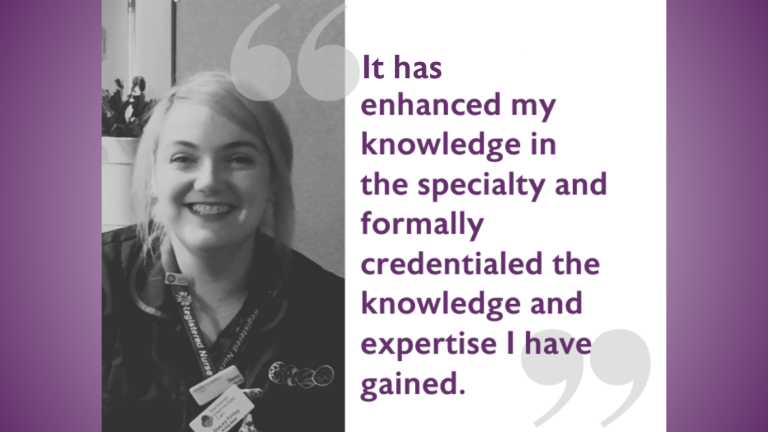
I enjoyed the academic rigour of the multiple choice epaper and felt a lot more confident in some areas because of it." - GP candidate
What preparation do I need to do?
In preparing for the exam, you need to allocate time for self-guided study. Material on the RCP website includes sample questions for the online knowledge-based assessment, as well as recommended study materials. Some universities and private providers offer short courses to help you prepare for the examination. BGS and RCP do not endorse any particular course, but we encourage you to prepare well, and take advantage of our conferences and online resources.
[As a GP], the bits [of the exam] I use most and advise on most are Frailty, MCA, DOLS, Parkinsons, Dementia, Falls, Nutrition, Equipment, Continence, UTI, Bone protection and Depression in older people." - GP candidate
What will I gain from the CGM?
The CGM has been created specifically for healthcare professionals who are not specialist geriatricians to help demonstrate their knowledge in the care of older people and in particular the management of frailty. It offers external recognition as part of your continuing professional development.
Healthcare professionals who would like to demonstrate their knowledge in geriatric medicine with a recognised award from the RCP and BGS are encouraged to sit the CGM. Those who would like to further evidence their clinical skills can also gain an additional qualification by passing the DGM. Both awards demonstrate capability in topics relevant to geriatric medicine.
The CGM is particularly suitable for overseas candidates, as all assessments are sat remotely.
What is involved?
The CGM takes the form of four multiple-choice papers, each lasting 90 minutes and comprising 50 questions per paper. For each question you will be asked to select the correct response from five possible answers. The exam is taken remotely so there is no requirement to travel.
What is the difference between the CGM and the DGM?
The key difference is that the CGM demonstrates knowledge of geriatric medicine topics through a series of knowledge-based assessment (KBA) online tests, while the DGM demonstrates clinical skills through a series of observed clinical examinations (OSCEs). Candidates must pass the CGM before optionally progressing to the DGM.
Up until 2027, the DGM was a two-part examination. Part one was a written KBA, and part two was assessed via a clinical examination. There are now two separate qualifications. The CGM is a new KBA examination, and the DGM (which candidates are eligible to sit after successful completion of the CGM) is an optional second qualification. This change means that even if you feel that the clinical examination element is not right for you, you will still receive a recognised award for passing the CGM.
| CGM | DGM | |
| Key outcome | Demonstrates knowledge of geriatric medicine topics | Demonstrates clinical skills in practice |
| Assessment | Online knowledge-based assessment | Observed clinical examination at the RCP Spine building in Liverpool, UK |
| Format | Four multiple-choice papers lasting 90 minutes each; 200 questions in total | Four 15-minute examination stations; 80 minutes in total (including transition) |
| Eligibility | Open to healthcare professionals qualified for 2+ years, including 4 months working with older people | Open to those who have passed the CGM (or DGM Part 1) within last 4 years |
| Award level | Certificate | Diploma |
When is the CGM exam held?
Dates for the 2027 exam are shown below. For full details of dates and fees, please visit the RCP website.
- Application period: Monday 4 January 2027 – Monday 18 January 2027 (11am UK time)
- Exam date: Wednesday 24 February 2027
- Result release: Wednesday 31 March 2027
What else do I need to know?
More information, including links and information to apply, can be found on the RCP website.
You can also sign up to hear CGM updates such as application date reminders and links to updated resources directly from the RCP here.