Henry Woodford is a consultant geriatrician at Northumbria Healthcare and chair of the BGS Medicine Optimisation SIG. He posts on Bluesky @henriatric.bsky.social.
Anyone who has worked with older people with frailty will have seen the all too familiar carrier bag of pills, met patients who try to ‘just take what they give me’, and had the suspicion that one of those dozen medicines could be the source of harm. But how do we get the balance right?
Medicines are a major component of healthcare and, when optimally prescribed, provide important benefits. This is evidenced by randomised clinical trials, which are often assimilated into disease management guidelines to promote best practice. Although, due to trial inclusion/exclusion criteria and the population screened for participation, the people recruited may not reliably represent everyone with the relevant condition. Trial participants tend to be younger and have fewer co-morbidities, and few people with dementia or care home residents are included.1 This hampers our ability to ensure every patient gets the most from their medicines.
Increased longevity and accumulation of long-term conditions have led to the normalisation of polypharmacy in old age, with more than half of people aged over 85 in England taking five or more regular medicines.2 Medication effectiveness for older people may be diminished by reduced life expectancy or competing causes of death. Polypharmacy and multimorbidity risk drug-drug and drug-disease interactions that could either reduce beneficial effects or increase adverse ones. In addition, people with frailty are more vulnerable to medication adverse effects. As a result, it is recognised that some prescribing for older people results in greater net harms than benefits.3 But the prevalence and magnitude of this problem is hard to accurately define.
Uncertainty stems from the lack of older people with moderate to severe frailty recruited to clinical trials. Resulting in a reliance on other forms of evidence, including observational data. Take hypertension for example, a recent observational study associated having a dementia diagnosis with a doubling of risk of adverse effects from antihypertensive medication.4 This adds to previous observational evidence that having a lower systolic blood pressure (<130 mmHg) is associated with a greater risk of death than having a far higher one (140 to 180 mmHg) for people aged 75 and over with moderate to severe frailty.5
So, in the light of medical uncertainty, is prescribing being driven by a public demand for more medicines? This appears unlikely to be a major factor. When asked, most people with polypharmacy would like to reduce the number of medicines they are prescribed, if possible.6 A desire for fewer pills also seems to be supported by the World Health Organisation’s estimate that only half of medication is taken as prescribed.7 And while emergency department corridors are lined with patients on trolleys, it is estimated that medication adverse effects contribute to around a sixth of hospital admissions.8 Taken together, these data suggest that there is much room for improvement in current prescribing practice.
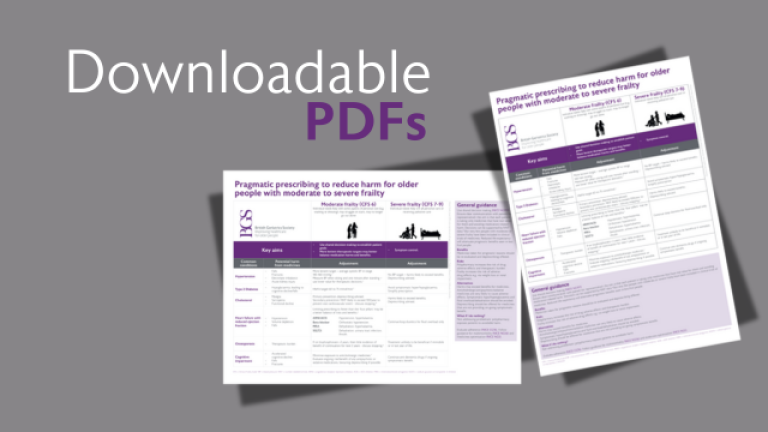
Of course, recognition that polypharmacy isn’t always a good idea differs from knowing what to do about it. The frailty-prescribing knowledge void is currently occupied by conflicting information. Single disease guidelines often promote prescribing for everyone, whereas clinicians treating people with frailty and multimorbidity often favour fewer medicines. It is unlikely that either side of this debate is universally correct, and an individualised approach is required. Stratification by degree of frailty can help inform treatment decisions and set realistic therapeutic goals.9 Older people with only mild frailty remain likely to be recruited to clinical trials and may benefit from a similar treatment approach to those without frailty. Whereas this is less likely for people with moderate and severe/very severe frailty. The concepts of individualising care through shared decision-making and stratifying therapeutic approach by degree of frailty form the basis for a new prescribing tool that has been jointly developed by members of the British Geriatrics Society, Royal College of General Practitioners, and Royal Pharmaceutical Society and builds upon already available guidance from the National Institute for Health and Care Excellence. The guidance can be accessed at https://www.bgs.org.uk/PragmaticPrescribing. The aim of this tool is to empower prescribers with pragmatic advice based on available clinical data and expert consensus with the hope that this can reduce medication-related harm. It is simple in design and brief in content to enable easy access in clinical settings to assist shared decision-making conversations and thus personalise care. It targets six common conditions, mainly involving medicines taken for prognostic reasons.
Older people with frailty are major users of modern healthcare and optimising their care should be a key target. Sometimes medicines not only fail to provide benefits or align with individual goals but instead cause harm. A complex problem like the interaction of frailty, multimorbidity and polypharmacy will not be solved by a single simple solution, but this new guidance aims to be a significant step in the right direction. All clinicians working with people with moderate to severe frailty are encouraged to incorporate its use in the care they provide.