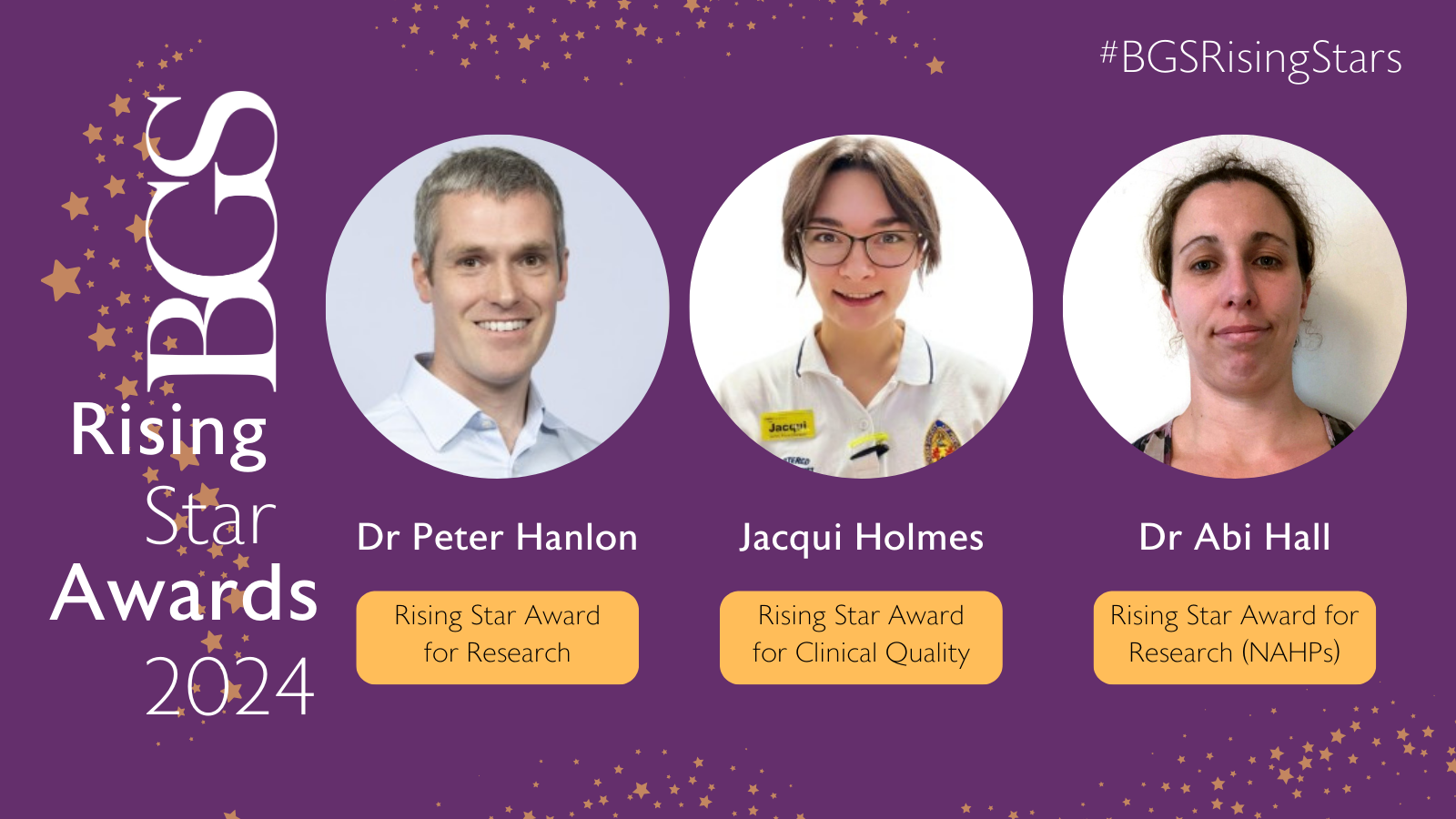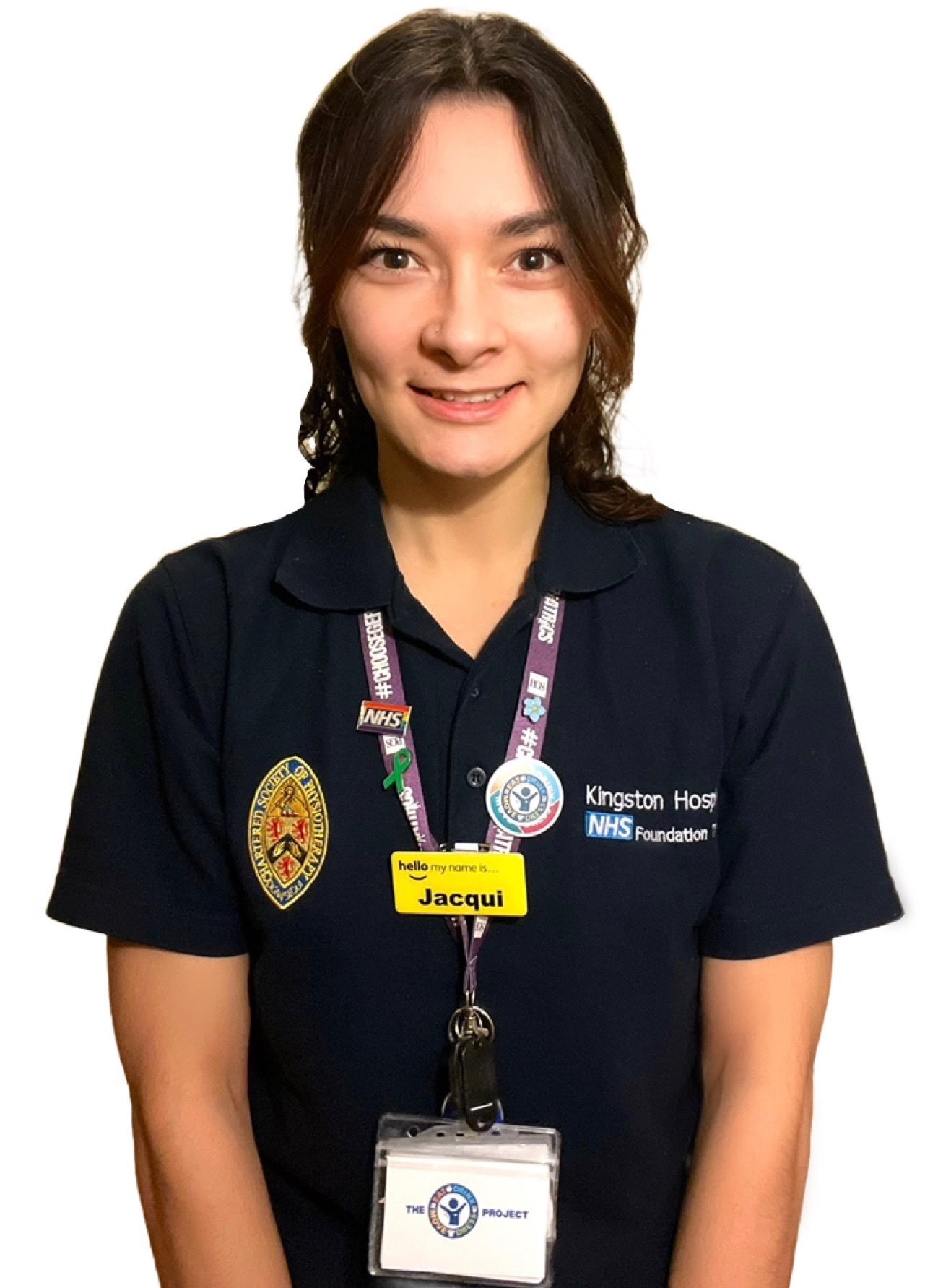
Jacqui Holmes is an Operational Lead for Inpatient Physiotherapy at Kingston and Richmond NHS Foundation Trust. She has a passion for transforming care for older people and enhancing frailty services. She is a strong advocate for allied health profession (AHP) leadership in quality improvement and was recognised with the British Geriatrics Society’s Rising Star Award for Clinical Quality in 2024. Jacqui posts on X: @jacquih0lmes
Before I began my career in physiotherapy, I had a couple of doubts. Could I really work well with older people? And…could I handle feet?
While I’m still not particularly fond of feet, I couldn’t be more inspired by working with older people! What started as hesitation has become a genuine passion.
Working with older people is a privilege. It’s about far more than treatment. It’s about truly understanding what matters most to the individual and collaborating within a multidisciplinary team to deliver person-centred care. As allied health professions (AHPs), our role is not just to manage illness but to preserve and enhance function, independence, and quality of life. We're not just adding years to life; we're adding life to years.
We all know that healthcare of older people is becoming increasingly complex, but with that complexity comes incredible opportunity. Opportunity to innovate, to lead, and to make a meaningful difference. I believe that geriatrics is so much more than a specialty; it’s a space where positive change can ripple out and impact the wider healthcare system.
This is why I’m passionate about encouraging more AHPs to consider careers in geriatrics. It’s a field rich in personal and professional growth, leadership development, and service innovation. I’m fortunate to have experienced those opportunities early in my own career. After a rotation in the ‘Healthcare of Older People’ team as a senior physiotherapist, I was motivated to improve the way care was delivered. That drive led me to a secondment as ‘Team Lead Physiotherapist’ – an incredible opportunity that allowed me to shape service delivery more directly.
It was during this time that I introduced my therapy team to the national #ReconditionTheNation initiative, led by the NHS England Emergency Care Improvement Support Team (ECIST). It marked a turning point in how I saw my role, not just as a clinician, but as a change agent. Through the projects I led as part of #ReconditionTheNation, I had the opportunity to rebrand, develop, and launch the Eat, Drink, Dress, Move (EDDM) Programme – an activity and mobility promotion programme designed to embed daily activity and holistic care into everyday practice. It has been a powerful step toward creating a culture that prioritises reconditioning, dignity, and independence within and beyond older people’s care.
Like many others, I often find myself battling imposter syndrome. In leadership and management roles, it’s common to progress without formal training. Most of the learning happens on the job, through real challenges and experiences that shape you along the way. That’s certainly been true for me, both in leadership and in quality improvement (QI). In fact, I am sure I was doing QI work long before I even realised it was just that! Which is why I am so deeply honoured to have been awarded the British Geriatrics Society’s Rising Star Award for Clinical Quality for my work to develop the EDDM Programme.
What began as a few small, simple changes in practice has evolved into a much larger programme of work. Inspired by the principles of the Johns Hopkins Activity and Mobility Promotion (JH-AMP) programme and shaped by my own learning and development in quality improvement, we’ve developed a structured and sustainable approach to reconditioning.
The Rising Star Award helps shine a light on the vital role AHPs can play in leading quality improvement in the care of older people. I'm incredibly grateful to the brilliant AHPs I've had the privilege of working alongside throughout my QI journey with the EDDM Programme, particularly our amazing speech and language therapists, occupational therapists, physiotherapists, and dietitians. I’m also thankful for the support and collaboration of our nursing and medical colleagues within the wider multidisciplinary team.
I would also like to give a huge shoutout to everyone who has reached out to share their interest in implementing EDDM as a solution to prevent deconditioning. I’m constantly inspired by the creativity and commitment of colleagues from other trusts who are driving forward their own mission to recondition! To know that EDDM is becoming part of that wider movement fills me with pride and motivation.
Looking back, I’ve come a long way from those early doubts. I’ve discovered my passion in both geriatrics and QI and have found a role in which I can continue to grow and contribute meaningfully to both areas. Looking ahead, I’m excited about what’s still possible: not just for me, but for any AHP who embraces the challenges and rewards of championing improvement in care for older people. With the ambitions of the NHS Ten Year Plan in mind, the potential for AHP leadership to shape and influence meaningful change has never been greater.
I’m delighted to be presenting on the EDDM Programme at the BGS Autumn Meeting (12–14 November 2025). If you plan to attend, I hope we can connect, exchange ideas, and continue to build momentum together!