Fragility or osteoporotic fractures are common, especially in older age, and have a huge personal impact and economic cost to society. Fragility fractures cost the NHS an estimated £4.4 billion per annum.
For the individual, these fractures, especially in the hip and spine, can lead to loss of independence, disability and reduced life expectancy. Vertebral fractures in particular are associated with long-term pain and other physical and psychological symptoms.
It is widely understood that physical activity and exercise help to make bones strong; however, there is lack of clarity about their role in bone health and the prevention of frailty, and for people with osteoporosis in particular.
| Definition of osteoporosis The term osteoporosis is used throughout this statement as an umbrella term to include someone with low bone mineral density (BMD) in the osteoporosis range (measured using dual X-ray absorptiometry (DXA)) or a significant fracture risk (based on fracture risk assessment) with or without fragility (low trauma) fractures, including vertebral. |
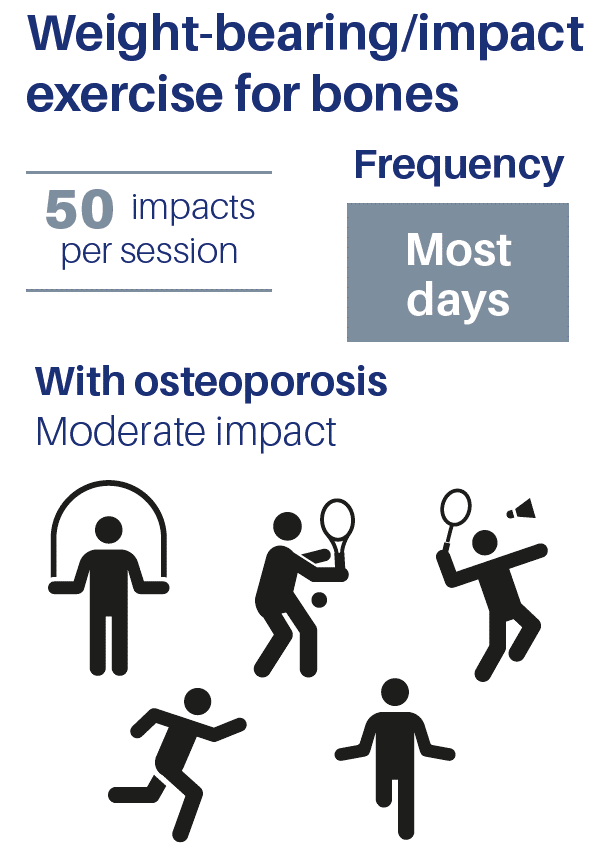
Many guidance documents warn against ‘forwardbending’, high-impact exercise (often interpreted as anything more than brisk walking) and lifting weights. This is based on a theoretically increased risk of vertebral fracture due to increased force through the bones by high-intensity resistance or impact exercise or increased load on the spine. Previous guidance, originally developed for those with vertebral fracture, has been generalized to all people with osteoporosis.3 For some health and exercise professionals, uncertainty around what is appropriate or safe persists, and may be accompanied by concerns about liability. As a result, people with osteoporosis often find the advice provided to be inadequate, confusing, varied or inconsistent.
Even where the evidence is inconclusive, people with osteoporosis are keen to incorporate non-drug approaches and take control of the management of their condition.
People with osteoporosis want to know:
- whether some types of physical activities and exercise interventions are unsafe and may cause fractures, especially in the spine.
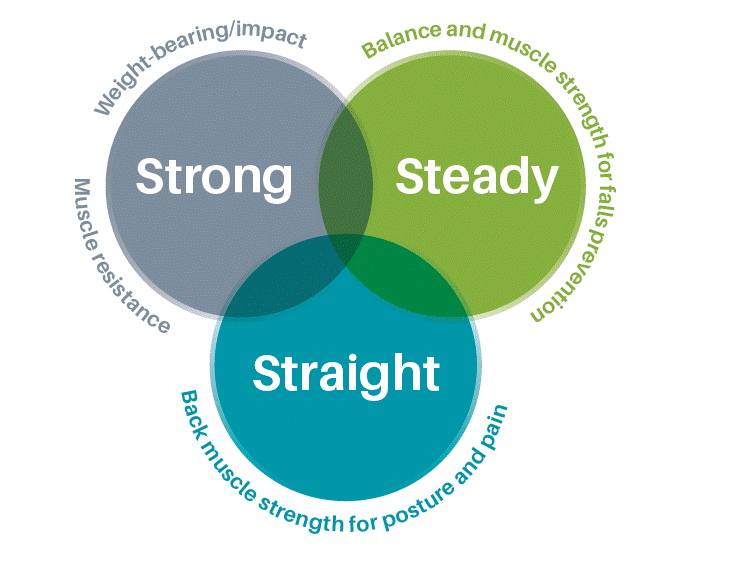
- what type of physical activity and exercise they need to do to effectively maintain or improve their bone strength.
- whether and how, they should modify moving, lifting, sports and leisure activities to prevent a vertebral fracture occurring.
- about specific exercise interventions to relieve the pain of painful vertebral fractures.
Without this information, people significantly reduce activity levels, limiting both function and enjoyment. This has adverse implications for their bone health, falls and future fracture risk. In fact, for the vast majority of adults and older adults, taking part in activities that promote muscle and bone strength is safe and will help maintain or improve function, irrespective of age or health.
Giving people confidence about physical activity and exercise for osteoporosis by means of authoritative and effective guidance may also prompt an increase in physical activity and exercise. This will have wider beneficial effects on physical, social and psychological health, wellbeing and self-efficacy.