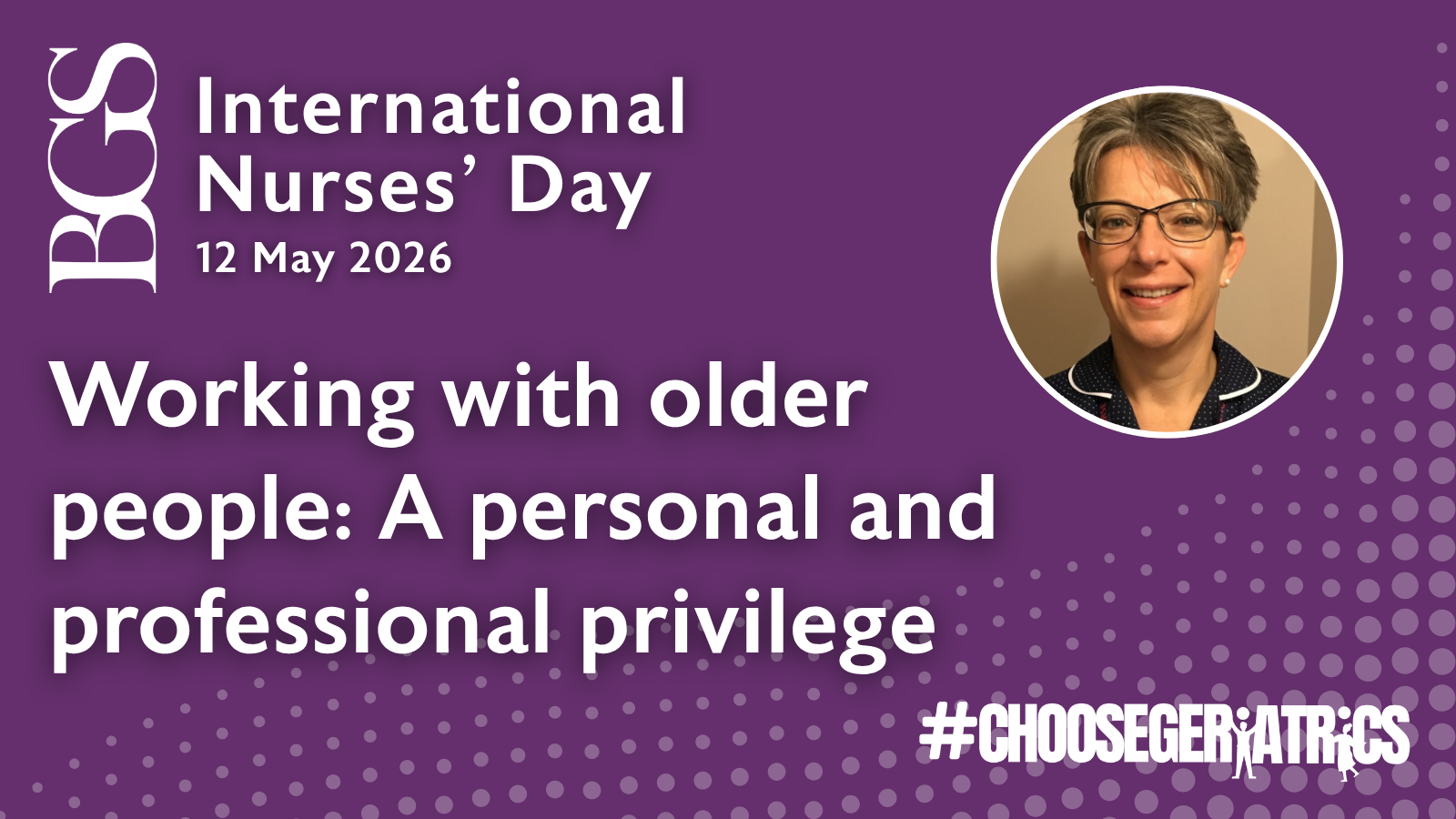
Sue Lyne is a Community Frailty Practitioner at East Sussex Healthcare NHS Trust and previously worked as a Nurse Consultant for Frailty.
As International Nurses’ Day approaches and I near completion of my 42nd year in nursing, I have taken time to reflect on my career, particularly my current role as a Community Frailty Practitioner.
My interest in older people developed from a very early age as a grandchild to my paternal grandparents, whom I loved dearly. Weekend sleepovers and stays enabled me to experience a very special, loving and unique relationship with them both. Unbeknown to me at this time, this would create the cornerstone on which the foundation of my nursing career was laid and thus began my love of nursing and older people.
Throughout my three-year training in the North of England, I was ‘drawn’ to older people in all of my placements, often causing my colleagues to be perplexed when they were in pursuit of what they considered to be more ‘exciting’ areas of nursing including A&E and ITU. They lacked understanding of my passion for nursing older people, but what they failed to recognise was the joy and enrichment of my learning through my encounters with older people. It deepened my understanding of the functional and psychosocial dimensions of an older person’s life, as well as developing empathic communication skills.
In 2016, I reached what I believe was the pinnacle of my career and became a Nurse Consultant in Frailty, leading the development of a community frailty practitioner team. After five years, I semi-retired and returned to work as a frailty practitioner in the service I had developed. I can honestly say I have never been happier in my work, and my passion for working with older people remains as strong as it did all those years ago.
Working as a community frailty practitioner, visiting older people in their own homes, affords an invaluable experience, allowing me to see them as ‘real people’ and not a patient in a hospital bed. Visiting someone in their own home enables them to feel less anxious about the encounter and provides an environment where they feel relaxed. We often talk about ‘holistic care’ in the NHS and, in frailty, the need to encompass multiple dimensions of frailty in the assessment process. The nurse-patient relationship in a person’s home is unique and enables the practitioner to see the person, not just the need. Seeing an older person in their own home provides an excellent opportunity to gather additional ‘diagnostic clues’ e.g. environmental and social factors which otherwise may have been missed and creates an opportunity to identify previously undiagnosed health and/or social care problems. This is so important to the older person, whereby the process of assessment is truly holistic and multidimensional and not just the assessment of a ‘condition’.
I never cease to be amazed at the level and quality of information shared by an older person during a visit to their home. The act of them sharing this information with me, a virtual stranger and, at times, such sensitive information, is such a privilege and assists greatly in determining the impact frailty has had on the older person’s life and that of their family. This in turn enables a person-centred approach to care planning ultimately positively affecting health outcomes.
The ultimate outcomes are those of promoting an older person’s independence, their dignity and their quality of life. Nursing is an honour and working with older people is a profound privilege.