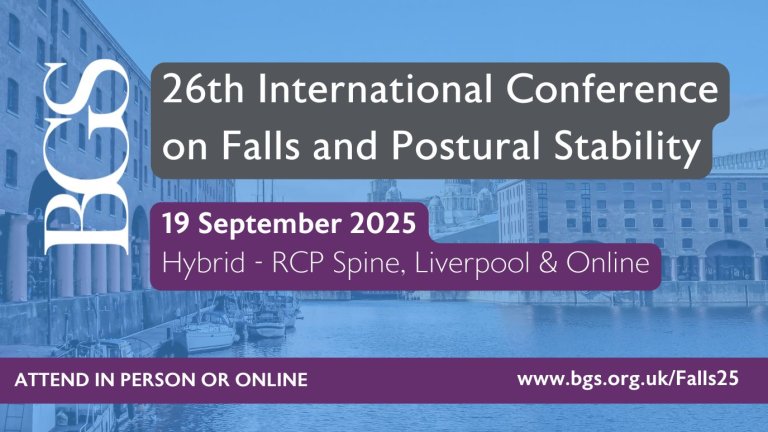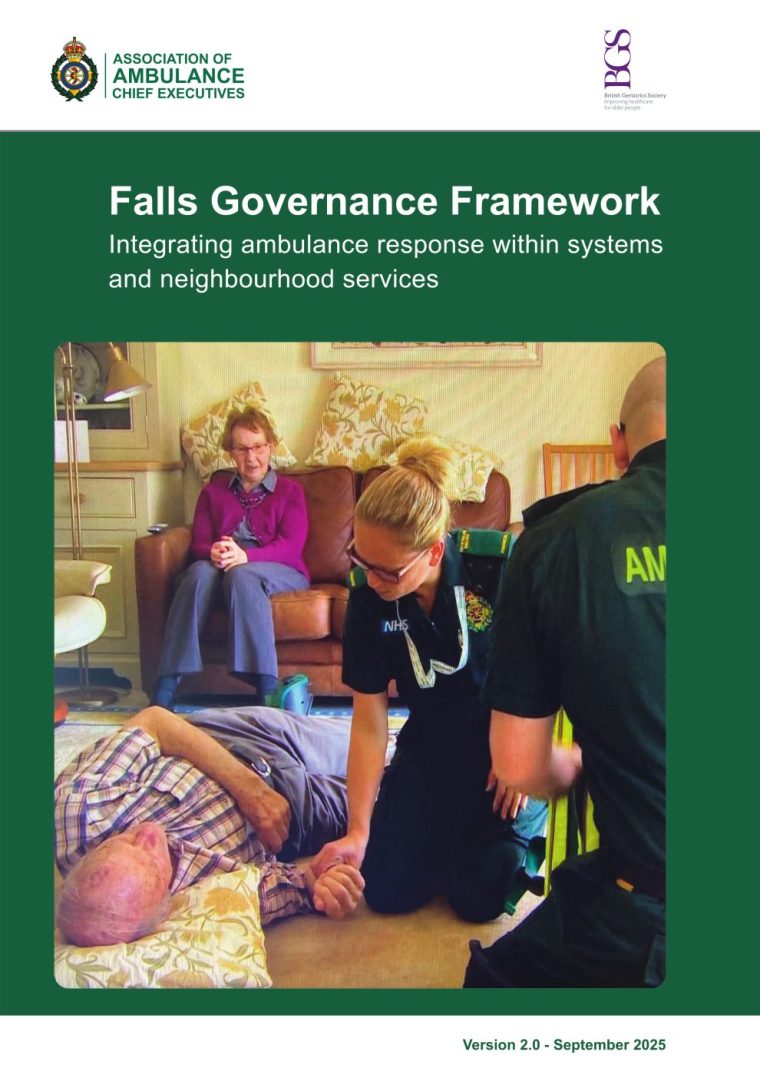
The Association of Ambulance Chief Executives (AACE), in collaboration with the British Geriatrics Society (BGS), will launch its new Falls Governance Framework during the UK’s national Falls Prevention Awareness Week 15-19 September 2025.
This new national framework is designed to support integrated, person-centred care for older people and those living with frailty who have fallen or are at risk of falling. It sets out a clear and coordinated approach for ambulance services and system partners to respond to falls in community settings, aligning with the NHS Long Term Plan’s vision to shift care from hospital to home, from analogue to digital, and from reactive treatment to proactive prevention.
“Falls are one of the most common reasons for 999 calls and a leading cause of injury, hospitalisation and loss of independence among older people,” says Anna Parry, Managing Director of AACE. “This framework supports ambulance services and Integrated Care Systems to work together to deliver timely, compassionate and clinically safe care, reducing avoidable admissions and improving outcomes for patients.”
The framework was developed with input from the clinical leads for falls at all UK ambulance services and is endorsed by the British Geriatrics Society. It reflects the priorities outlined in NHS England’s Urgent and Emergency Care Plan for 2025/26 and provides practical guidance for ambulance trusts, commissioners and community providers to:
- Deliver responsive, evidence-based care for people who have fallen
- Integrate falls prevention and frailty services across neighbourhood teams
- Support remote assessment and digital triage where appropriate
- Enable safe non-conveyance to emergency departments (ED) and wraparound care in the community
- Reduce harm and promote independence through proactive care planning
“We welcome this framework as a vital step in embedding frailty-aware, multidisciplinary responses to falls,” said Professor Jugdeep Dhesi, President of the British Geriatrics Society. “It recognises the complexity of falls and the need for joined-up care across ambulance, primary, community and voluntary services. With an ageing population, we must act now to prevent avoidable harm and support older people to live well at home.”
Falls cost the NHS over £2.3 billion annually, with around 75% of that burden arising in social care, home and community settings. One in three people aged 65+ and half of those aged 80+ fall each year. Among major trauma patients, low-level falls are the leading mechanism of injury in older adults, often resulting in hip fractures, brain injuries and long-term disability.
The new falls framework outlines five key domains for safe and effective falls management:
- Prevention – using every contact to raise awareness and signpost to support
- Community resilience – enabling timely, non-ambulance responses where appropriate
- Assessment & remote care – leveraging digital platforms for personalised triage
- Falls response – coordinating urgent care with system partners to avoid ED conveyance
- Avoiding further harm – embedding risk assessments and care planning to reduce recurrence
Ambulance services receive up to 10% of 999 calls related to falls. Yet current triage systems and fragmented referral pathways often limit the ability to deliver timely, joined-up care. This framework calls for greater interoperability, clearer roles, and shared clinical governance across systems. AACE and BGS are urging commissioners, providers and local authorities to adopt the framework and work collaboratively to improve outcomes for people who fall, particularly those living with frailty or nearing end of life.
The AACE Falls Governance Framework is available online here.