World Pharmacists Day on 25 September provides an opportunity each year to celebrate pharmacists and their crucial role in healthcare.
The theme for 2026, Empowering pharmacists for healthier futures, highlights the vital contribution pharmacists make to building healthier futures and ensuring people have access to the care, expertise and support they need. Inspiring the next generation of pharmacists is also essential to ensure the profession continues to develop and is equipped to meet the healthcare needs of the future.
Three pharmacy undergraduate students from Queen’s University Belfast recently completed the MED-AGE Summer Research Placement Programme, co-funded by the British Geriatrics Society and Vivensa Foundation.
The six-week programme introduces undergraduate students to ageing-related research, helping them develop an interest in research early in their academic careers and strengthen their applications for future postgraduate research opportunities.
To mark World Pharmacists Day, here is what Emily Lavery, Katie Lloyd and Chloe McGinty had to say about the experience:
Emily Lavery
Project: Public Transport Accessibility to Community Pharmacies for Older Adults in Northern Ireland
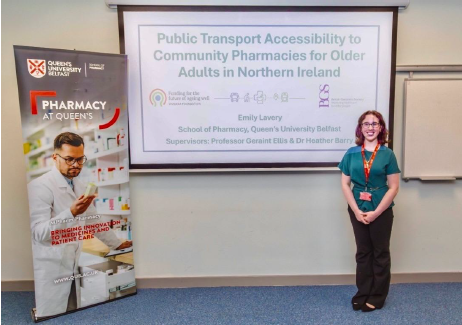
Working collaboratively with the School of Natural and Built Environment, I adopted quantitative and qualitative case study approaches, generating data specific to older adults and translating timetables into potential patient journeys.
Engaging with Patient and Public Involvement Representatives reinforced the importance of keeping patients at the centre. The project strengthened my problem-solving skills, which I will apply to future practice when supporting patients with their medicines.
Before undertaking this project, I had not fully appreciated the barriers some older adults may face before even reaching the pharmacy. This experience has broadened my understanding of health equity and will help me approach future patient interactions with greater empathy and awareness of the wider circumstances affecting healthcare access.
I want to thank the funders, the British Geriatrics Society and Vivensa Foundation and everyone who supported me throughout the project. I am very grateful for being afforded this experience.
Katie Lloyd
Project: The Efficacy and Safety of Non-steroidal Injectable Therapies For Hand Osteoarthritis Versus Intra-Articular Corticosteroid Injections: A Systematic Review and Meta-analysis
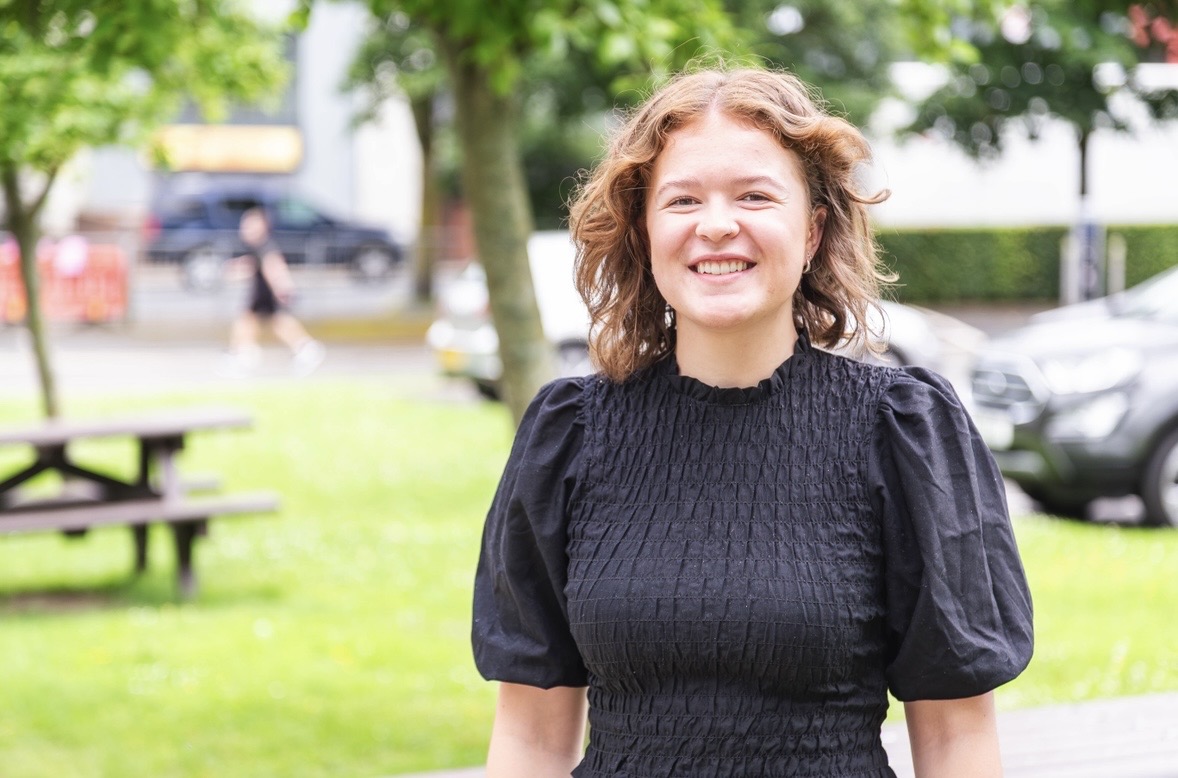
This summer, I had the opportunity to complete a six-week MED-AGE Summer Studentship at Queen’s University Belfast, co-funded by the British Geriatrics Society and the Vivensa Foundation. Working alongside Dr Neil Heron and Dr Heather Barry, I explored the evidence for non-steroid injectable treatments for hand osteoarthritis through a systematic review.
As a pharmacy student with most of my experience coming from community pharmacy, it was my first opportunity to be involved in research. I developed skills in literature searching, data extraction and critical appraisal, and presenting my findings at the end of the project helped build my confidence in communicating research.
The experience showed me that pharmacists can contribute to healthier futures in many different ways, not only through direct patient care but also through research and evidence-based practice. Seeing how research can help inform clinical decisions and ultimately improve patient care gave me a greater appreciation of the wider role pharmacists can play in healthcare. It has also encouraged me to continue exploring opportunities to develop my skills and contribute to evidence-based practice throughout my pharmacy career.
Chloe McGinty
Project: Clinical and Environmental Antimicrobial Resistance in Northern Ireland Care Homes

Taking part in the MED-AGE Summer Studentship has been an incredibly rewarding and insightful experience, giving me the opportunity to explore an area of pharmacy and healthcare that I had not previously experienced in such depth.
Over six weeks, I developed practical skills in microbiology, antimicrobial susceptibility testing and molecular techniques while investigating antimicrobial resistance in a care home environment. This experience demonstrated the importance of laboratory research in addressing real-world healthcare challenges and protecting vulnerable populations, particularly older people.
The studentship also allowed me to work alongside expert researchers and build relationships with PhD students, opening my eyes to the possibility of pursuing a career in research after graduating from Pharmacy. Presenting my findings to an academic audience also helped me develop my confidence in public speaking and academic communication.
This experience has strengthened my interest in antimicrobial stewardship and research, while highlighting the important role pharmacists can play in tackling antimicrobial resistance and supporting healthier futures for our ageing population.
I am very grateful to everyone who made this amazing opportunity possible.