Proactive and integrated workforce model
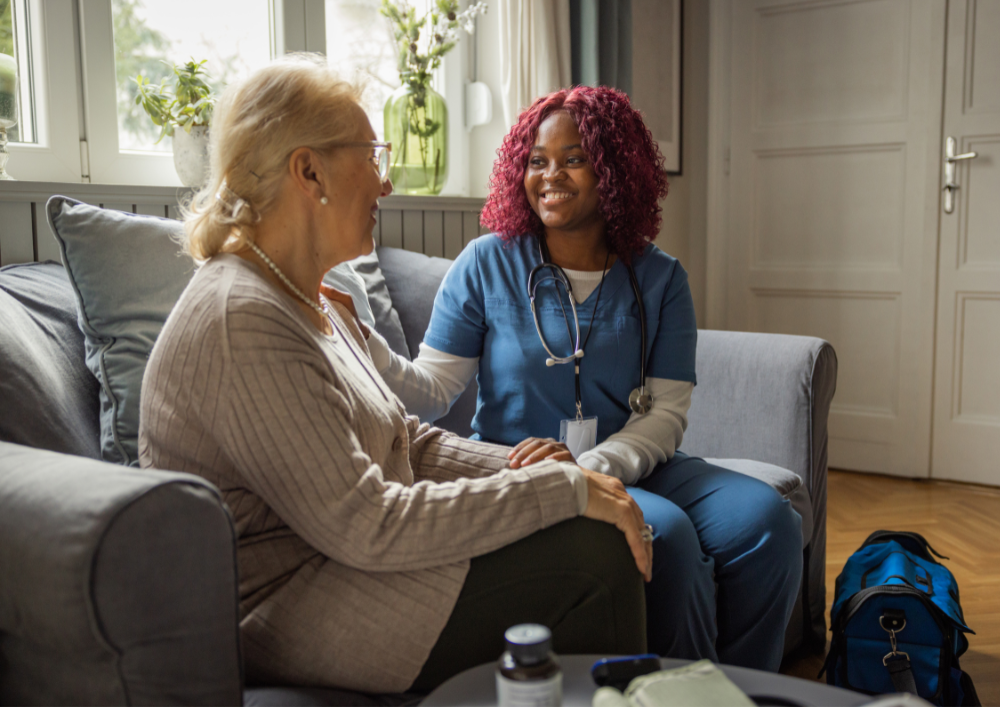
Many staff from different healthcare disciplines, social care and housing providers, community and third sector partners work alongside unpaid carers to support older people to achieve their rehabilitation goals.
Family carers provide valuable support for recovery and need to be supported as equal partners in care, albeit recognising their capacity may be limited due to their own health or other constraints. Which practitioners should be involved in rehabilitation should be based on holistic assessment of need and individualised goals. Multidisciplinary teams are varied in composition and the leadership of the team should not be based on an idea of ‘seniority’ but on which team member has expertise in the priority concern of the individual.
Integrated workforce planning is required to meet the growing demand for rehabilitation in an ageing population. NHS England suggests education and training places for allied health professions will need to grow by as much as 25% by 2030-31 to meet demand.84
Workforce models that optimise skill mix and enable people to work at the top of their licence can increase system capacity and extend the reach to older people who are currently excluded from access to rehabilitation. A strategic and integrated approach can be facilitated by appointing a rehabilitation director operating at executive level within the system and establishing a local network of providers who consider existing services and collaborate to improve access, ensure equity of provision, reduce fragmentation and make best use of collective workforce capacity. Capacity planning involves assessing needs of individuals and aggregating at a neighbourhood level. There are models to help in planning required capacity.85 Population segmentation and risk stratification have been applied over recent decades to better understand levels of need within a neighbourhood and plan capacity of teams accordingly.
Many rehabilitation programmes are for specific conditions (eg stroke, heart failure, respiratory disease) but often have common elements and shared resources that are useful for people with multimorbidity or frailty. Flexible delivery may enhance interdisciplinary learning and service efficiency as illustrated by the generic Healthy and Active Rehabilitation Programme developed in Ayrshire in Scotland, working with leisure service partners.86
The Collaborate Don’t Compete project87 describes how different exercise professionals can work together to promote stronger rehabilitation outcomes, including for older people.
| Key message 8 Rehabilitation is a multi-agency endeavour involving many health and social care disciplines, voluntary sector, volunteers, unpaid carers, housing and community leisure services. Systems should work with all partners to offer rehabilitation for older people as a key component of health and social care within age-friendly communities. |