Introduction
The importance of rehabilitation was highlighted in recommendation 7 of the BGS Blueprint: “Protect and preserve the right to rehabilitation for all older people who need it, in line with the principles outlined by the Community Rehabilitation Alliance.”1
Rehabilitation (or recovery) is a set of interventions designed to optimise functional ability, social participation, improve health and wellbeing and reduce disability in individuals with health conditions in interaction with their environment.5 Due to resource constraints within the NHS, rehabilitation packages are typically time-limited. Interventions include:
- Holistic assessment considering the social determinants of health and acknowledging multimorbidity
- A personalised rehabilitation treatment plan based on shared decision-making and goal- oriented personalised interventions
- Information, advice and education to build confidence and support self-management and participation
- Medication reviews and advice to ensure medicines are used to optimise rehabilitation
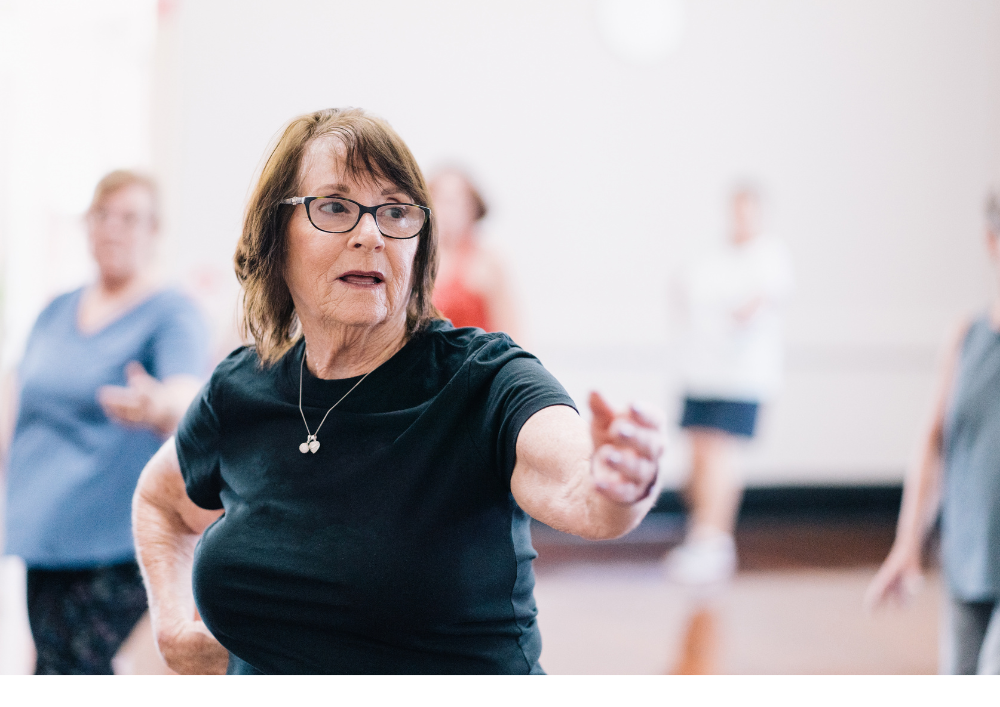
- Structured exercise (one-to- one, in groups, in person or online)
- Support with diet
- Psychological support
- Support with communication, adaptations, assistive technology and digital skills.
A European consensus statement defined geriatric rehabilitation as a multidimensional diagnostic and therapeutic approach which aims to optimise functional capacity, promote activity, preserve functional reserve and social participation in older people with disabling impairments.6 A systematic review of 42 European studies of integrated care for older people called for a more (integrated) holistic response, blending a chronic care approach with education, enablement and rehabilitation to optimise function, particularly at times of a sudden deterioration in health, or when transitioning between home, hospital or care home.7
Comprehensive Geriatric Assessment (CGA), a highly evidence-based approach that combines assessment and multidimensional interventions, tailored to modifiable physical, psychological, cognitive and social factors, improves outcomes for older people and is the cornerstone of an integrated approach to preventing and managing frailty.8,9 Rehabilitation should be considered a core element of CGA – not an optional add-on.
| Key message 1 Systems should invest in rehabilitation as a priority for more sustainable care. Rehabilitation for older people improves lives, delays escalation of dependency, reduces demand and costs for readmission to hospital and avoids premature long-term care. |
Rehabilitation is also a key component of proactive care as set out in NHS England’s new framework for proactive care for older people living at home with moderate or severe frailty.10 Average annual costs of primary and secondary care service are three to four times higher for individuals who have moderate to severe frailty, but overall system costs are highest for people with mild frailty as the largest population cohort.11 Many providers and health and care systems aspire to scale up proactive care for people with all levels of frailty to prevent escalation of health and care needs, delay onset of disability, and reduce demand for emergency department attendance or admission to hospital or care home.12 Rehabilitation capacity is critical for successful proactive care (sometimes known as pre-habilitation, as detailed in chapter three) and for scaling up intermediate care community alternatives to acute hospital care.13 For an individual with deteriorating health and wellbeing, rehabilitation goal-setting may overlap with future care planning or end-of-life care planning. It will be important to recognise trigger points where the goals of care may change, through shared decision-making with the individual supported by those who are important to them.
| Key message 2 Rehabilitation is an essential component of virtually all healthcare for older people and should be integral to care plans in all settings: at home, in hospital, ambulatory care, care homes and hospice. |