Conclusions
With population ageing and older people living for longer periods with frailty and multimorbidity and the resultant impacts on cognition, mobility and continence, the need for greater investment in rehabilitation is urgent and growing.
Rehabilitation for older adults is an important ‘invest to save’ approach for health and care systems as it reduces the impact of acute or chronic conditions, illnesses or injuries by preventing or delaying long term disability and dependency and reducing carer burden. Optimal rehabilitation helps prevent avoidable hospital admissions or readmissions, reduces hospital length of stay, reduces the need for long-term social care at home and reduces rates of admission to long-term care facilities. It should be embedded as a core component of care at all levels of an integrated health and social care approach, and be readily accessible at home, in hospitals, in care homes, in primary care services, ambulatory care settings and in other community facilities such as leisure centres.
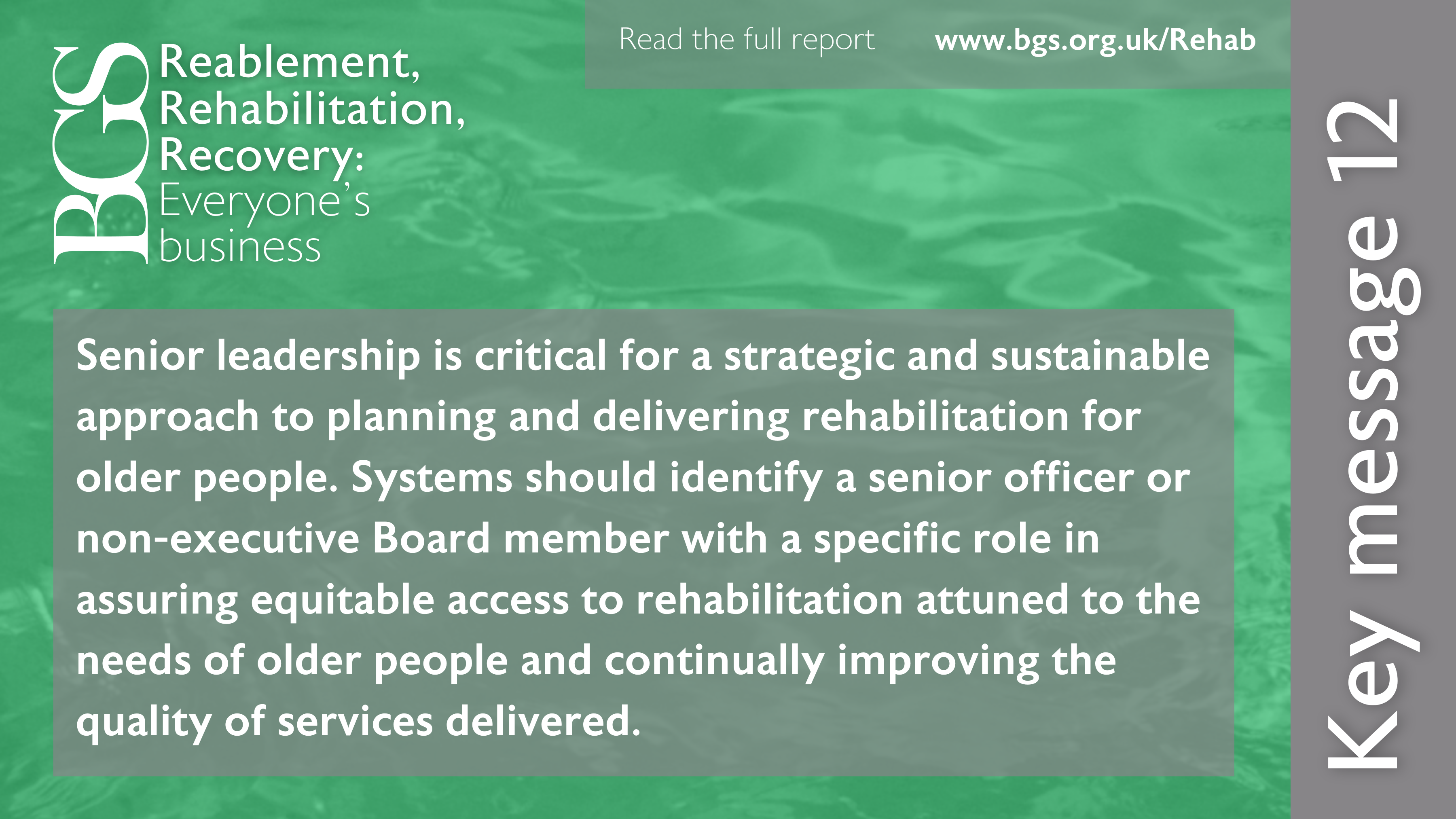
However, there are continuing workforce challenges and no new national funding to ramp up rehabilitation capacity. To transform care and support, systems must view rehabilitation as critical ‘invest to save’ expenditure and rapidly work with partner organisations to build capability across the collective workforce. Rehabilitation involves healthcare professionals across the multidisciplinary team and across all care settings. Ensuring no older person is left behind requires integrated workforce planning for population health and strong collaborative leadership within integrated systems. To ensure that this issue is given adequate prominence by systems, a designated senior officer or Board member should be responsible for ensuring access to high-quality rehabilitation for older people.
| Key message 12 Senior leadership is critical for a strategic and sustainable approach to planning and delivering rehabilitation for older people. Systems should identify a senior officer or non-executive Board member with a specific role in assuring equitable access to rehabilitation attuned to the needs of older people and continually improving the quality of service delivered. |