Dr Rachel Cowan is a Consultant Geriatrician at Nottingham University Hospitals NHS Trust. She is the Co-Chair of the BGS Dementia, Delirium and Brain Health SIG.
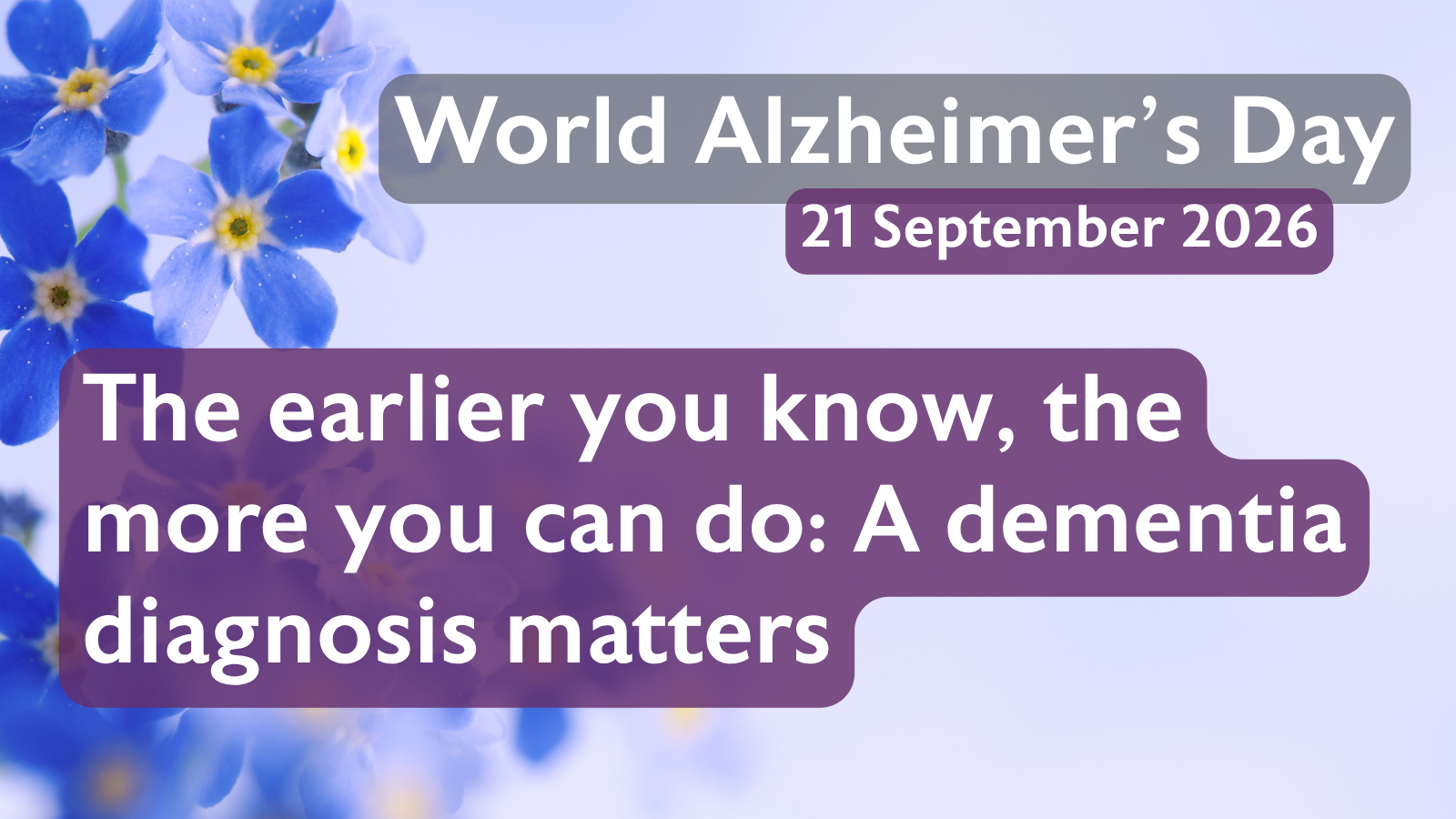
September is World Alzheimer’s Month, with World Alzheimer’s Day falling on 21 September. Each year, Alzheimer’s Disease International call for global unity and support in raising awareness and challenging stigma around all types of dementia (of which Alzheimer’s disease is the most common). In 2026, the campaign focuses on the importance of early diagnosis.
Dementia is a global public health priority. The impact of dementia on health and social care frameworks is well documented and anticipated to increase with global life expectancy. Dementia has significant personal, social and financial implications for individuals who develop it, their families and carers. The need to ensure equitable access to dementia diagnosis, with the opportunities that this provides, is one of the main components of the WHO global action plan.1
Timely dementia diagnosis
The point at which a dementia diagnosis is sought is dependent on two factors. Firstly, there must be recognition (by the individual, or someone involved in their life) of changes in a person’s cognition and functioning. Secondly, they must appreciate the value in seeking help for this – this may be obvious at a point of crisis, but the benefits of proactively seeking a diagnosis are not necessarily apparent.2 Public awareness campaigns articulate the benefits of getting a dementia diagnosis, such as the ability to access treatments, information, advice and support. However, the process to receive a diagnosis is not always straightforward. A recent carers survey carried out by the Alzheimer’s Society highlights the emotional, financial and social implications of long waits for memory assessment in the UK, with 45% of people waiting over 6 months for a diagnosis. Nine out of ten survey respondents felt that at least one aspect of life became easier after a formal diagnosis.
Early diagnosis versus timely diagnosis
A ‘timely’ diagnosis is made at a point when identifying that someone has dementia is beneficial. An ‘early’ diagnosis implies that the diagnosis is made at a point in time early in the course of the disease. Yet, an early diagnosis must also be timely; there must be benefit in diagnosing dementia early within its course. The value of universally investigating, or labelling, dementia symptoms has been historically challenged. The natural progression of dementia is multifactorial, not clearly understood and not always predictable.2 Currently, there are no disease modifying treatment options for dementia available on the NHS – management is focused on symptom control only. It is understandable that the value of a dementia diagnosis may be questioned when there is uncertainty about the future, and when treatment options are limited. We know that accurate dementia detection rates are important on a population level for healthcare planning3, but how can we ensure that early diagnosis provides person-centred benefit on an individual level?
Early diagnosis to facilitate proactive support
Early dementia diagnosis creates an opportunity for proactive support for the person with dementia and those involved in their wellbeing. This should include recognition of and action to modify brain health risk factors and frailty, with a focus on maintaining functioning, and consideration of future planning. Considering memory in isolation from the rest of an individual’s physical health and functioning is no longer adequate. As we frequently encounter within geriatric medicine, fragmented care doesn’t work. Addressing the global challenge of dementia requires an integrated, holistic, systemic approach.4
Early diagnosis in Alzheimer’s disease
As research into the utility of biomarkers progresses, the process for Alzheimer’s disease diagnosis is advancing. Blood-based biomarkers are approaching clinical acceptability; adding a biological diagnosis to the clinical diagnosis enhances the accuracy of dementia diagnosis.5 Disease-modifying treatments for Alzheimer’s disease are not available on the NHS, but are in use globally, and in the private sector in the UK. Early identification of Alzheimer’s disease within the disease course is essential for these treatments to be considered and beneficial. The future of pharmacological management of Alzheimer’s disease remains unclear, but a healthcare infrastructure to support early diagnosis will go hand in hand with disease-modifying treatments.
Future reflections
World Alzheimer’s Day 2026 focuses on raising awareness of the opportunities created through early diagnosis of dementia. Public awareness campaigns continue to focus on the importance of recognising symptoms of dementia, and the potential benefits of accessing support and services early. On reflecting on the value of early diagnosis, it is clear that the approach to dementia diagnosis, and what happens next, must be resourced to meet the needs of our ageing population and the increasing proportion of people living with frailty. Early diagnosis is an opportunity for proactive action, and healthcare services must evolve to have the capability to provide this.